Volume: 14 Issue: 5 October 2016
FULL TEXT
Objectives: Our objectives were to compare the clinical outcomes of mizoribine (12 mg/kg/d) and mycophenolate mofetil (2000 mg/d) in combination with tacrolimus, basiliximab, and corticosteroids.
Materials and Methods: We enrolled 83 recipients of living-donor renal transplant (performed between 2008 and 2013) in this study. This prospective multi-institutional randomized comparative study compared mizoribine (n = 41) and mycophenolate mofetil (n = 42) in combination with tacrolimus, basiliximab, and corticosteroids for living-donor renal transplant recipients. We compared the acute rejection and graft survival rates and adverse event rates within 1 year of renal transplant between the 2 groups using intention-to-treat analyses.
Results: During the 1-year observation period, patient and graft survival rates were 100%. The acute rejection rate was 17.1% in the mizoribine group and 19% in the mycophenolate mofetil group. The incidence rate of cytomegalovirus infection seropositivity (recipient and donor with positive cytomegalovirus antibody status) was higher in the mycophenolate mofetil group than in the mizoribine group, although the difference in these rates was not statistically significant. The incidence of leukopenia was higher in the mizoribine group than in the mycophenolate mofetil group.
Conclusions: High-dose mizoribine at 12 mg/kg/day was a safe and efficacious immunosuppressive alternative to mycophenolate mofetil in living-donor renal transplant recipients. Leukopenia should be closely monitored in the initial period of insufficient kidney function after renal transplant.
Key words : Acute rejection, Adverse event, High-dose mizoribine, Kidney transplant, Randomized controlled trial
Introduction
In 1984, mizoribine (Bredinin, Asahi-kasei Pharmaceutical Co, Tokyo, Japan), which was produced from the soil on Hachijojima Island, was approved and first administered as an immunosuppressive regimen with azathioprine (Imuran, Tanabe-Mitsubishi Pharmaceutical Co, Tokyo, Japan) and corticosteroids (methylprednisolone; Medrol, Pfizer, Tokyo, Japan) in renal transplant.1,2 After development and approval of calcineurin inhibitors such as cyclosporine (Neoral, Novartis, Basel, Switzerland) and tacrolimus (Prograf Graceptor, Astellas, Tokyo, Japan) in the latter half of the 1990s, the overall graft survival rate improved dramatically and ultimately surpassed a 95% graft survival rate at 1-year posttransplant. It would be interesting to determine the suitable dose of mizoribine versus mycophenolate mofetil (MMF) required to achieve excellent graft survival rates after transplant. Our first study3 showed no significant differences in adverse events (AEs) and acute rejections (ARs) between the MMF and mizoribine groups; however, the sample size of this study was small, and basic immunosuppressive regimens did not include basiliximab (Simulect; Novartis Pharma, Basel, Switzerland). Here, we performed a prospective multicenter randomized comparative study of mizoribine (n = 41) and MMF (n = 42) in combination with tacrolimus, basiliximab, and methylprednisolone in living-donor renal transplant recipients.
Materials and Methods
Ethical approval and data disclosure
This was a prospective randomized comparative multi-institutional study on
antimetabolite drugs, high-dose mizoribine (12 mg/kg/d) and MMF (2000 mg/d). The
study was conducted in accordance with the guidelines of the Declaration of
Helsinki. The protocol was reviewed by the ethics committee at each study center
(main research center was the Tokyo Women’s Medical University Hospital;
approval no. 1531), and all patients provided written informed consent before
transplant. The study information was disclosed in the University Hospital
Medical Information Network Center (registration No. 9120) between October 15,
2012, and December 26, 2014, during the study period.
Patients
Between October 2008 and December 2013, we randomized 85 consecutive adult
recipients from 12 hospitals in Japan to receive high-dose mizoribine (n = 41)
or MMF (n = 44). Patient enrollment at each center was stratified according to
annual transplant numbers to minimize the influence of differences in treatment
among institutions on the results. Most of the enrollment was performed by 3
representative centers (Tokyo Women’s Medical University, Osaka University, JCHO
Sendai), with all following the common protocol. It took more than 5 years to
complete registration in this study because financial acceptability of high-dose
mizoribine under national insurance varies with areas in Japan.
Randomization was performed by an independent biostatistics and data center (STATZ Institute, Inc., Tokyo, Japan). The recipients in this study were primary renal transplant recipients from living ABO-matched donors. The following patients were excluded: ABO-incompatible recipients, highly sensitized recipients with crossmatch test positivity, age < 16 years, recipients with severe infectious complications, recipients with a history of transplant, and recipients from deceased donors. As shown in Figure 1, at the time of the analysis, 2 patients were excluded from the study because 1 received an ABO-incompatible graft and another was mistakenly randomized. Thus, the remaining 83 patients (41 mizoribine, 42 MMF) were included. Eleven patients in the mizoribine group were converted to the MMF group because of AEs (unacceptable AR in 4 patients; hyperuricemia in 3 patients; and severe bone marrow suppression, severe chest pain, severe proteinuria, and persistent lower tacrolimus trough level in 1 patient each). Four patients in the MMF group were converted to mizoribine because of liver dysfunction in 2 and severe cytomegalovirus (CMV) infection in 2. One patient was changed from MMF to azathioprine because of the patient’s strong desire for pregnancy and delivery.
Immunosuppressive regimens
The immunosuppressive protocol consisted of tacrolimus, MMF, or mizoribine;
methylprednisolone; and basiliximab. Starting doses were mizoribine at 12
mg/kg/d and MMF at 2000 mg/d. Tacrolimus and methylprednisolone doses were set
according to the protocol of each institution. Tacrolimus was started at a dose
of 0.1 mg/kg/d, with dose titration to maintain a trough level at 5 to 10 ng/mL
during the study. Mycophenolate mofetil was administered at an initial dose of
2000 mg twice per day and was reduced to 1500 mg on day 14. Basiliximab at 20 mg
was administered intravenously before reperfusion and at the same dose on day 4.
Methylprednisolone was administered intravenously at a dose of 250 to 500 mg
before reperfusion and subsequently at a dose of 125 to 250 mg on day 1. The
steroid was switched to oral methylprednisolone at 20 mg on days 5 and 6 and
tapered thereafter (Figure 2).
Diagnosis and treatment of graft rejection
A protocol biopsy was performed within 12 months after transplant. Patients with
complications, perirenal infection, or bleeding tendency were excluded. When
rejection was suspected, an episode biopsy was performed. Rejection type was
classified according to the Banff 07 criteria. Two or three core biopsy samples
were obtained using a spring-loaded 16-gauge needle under ultrasonography
guidance. The diagnosis of rejection was made by the same pathologist in all
patients at each institution. Treatment for AR was in accordance with each
institution’s guidelines. Briefly, at the time of diagnosis of biopsy-proven or
subclinical AR, steroid pulse therapy at 500 mg/day was administered
intravenously for 2 days, followed by tapering oral methylprednisolone to 20
mg/d within 1 week. Acute rejection resistant to steroid pulse therapy was
treated using antithymocyte globulin (Thymoglobulin, Sanofi Aventis Co, Tokyo,
Japan).
Study endpoints
The primary endpoint was CMV incidence rate during the first year after kidney
transplant. Secondary endpoints were patient survival rate, renal graft survival
rate, and the incidence rate of AR (clinically and/or biopsy-proven AR).
Statistical analyses The present study was designed to detect an absolute 32% reduction in CMV incidence during the observation period in the mizoribine group arm compared with that in the MMF group,4 although rejection incidence and patient and graft survival rates showed noninferiorities in this report. To detect this difference at a two-tailed 5% level of significance with 80% power (1-beta error), 43 patients per group (86 in total) were required. All endpoints were assessed using the intention-to-treat analyses in which all available follow-up data were included from randomization to end of study. Data are presented as means ± standard deviation and medians with interquartile ranges or frequencies. We used t test to compare groups with respect to normally distributed continuous variables and Mann-Whitney U test for other variables. Chi-squared test or Fisher exact test (when the expected value was < 5) was used to compare nominally scaled variables. Cumulative probabilities of rejection-free curves were estimated using the Kaplan-Meier method, and differences in curves were determined using the log-rank test. Two-tailed P values < .05 were considered statistically significant. All analyses were performed at an independent biostatistics and datacenter (STATZ Institute, Inc.) using SAS System version 9.3 (SAS, Cary, NC, USA).
Results
Patients
Table 1 shows baseline characteristics of patients and pretransplant
complications in the recipients and donors. We found no significant differences
in any baseline background variables for recipients or donors between the 2
groups, except for serum creatinine levels, estimated glomerular filtration
rates, serum urea nitrogen levels, and uric acid levels. The mean serum
creatinine level was significantly higher in the MMF group, while the estimated
glomerular filtration rate was lower in the MMF group because more preemptive
recipients were randomized to the mizoribine group.
Patient and graft survival rates
Patient and graft survival rates were both 100%, as observed using
Kaplan-Meier analyses (data not shown).
Acute rejection rate
Figure 3 shows the rejection-free rate using Kaplan-Meier analysis and
chi-squared test. We found no significant difference in the rejection-free rate
between the MMF and mizoribine groups (Kaplan-Meier analysis, P = .835).
Rejection episodes included T-cell-mediated rejection, antibody-mediated
rejection, and unconfirmed rejection. Unconfirmed rejection was treated with a
steroid-pulse bolus without graft biopsies due to clinical manifestations such
as a 20% elevation in serum creatinine level in the clinical course. The
rejection-free rate was 82.9% in the mizoribine group and 81.0% in the MMF
group. The type of rejection was not significantly different between the MMF and
mizoribine groups (Table 2). Unconfirmed rejection was observed in 5 of 42
patients (11.9%) in the MMF group and in 3 of 41 patients (7.3%) in the
mizoribine group, with no significant differences in unconfirmed rejection rates
between groups (P = .479).
Adverse events
Table 3 shows the AEs after renal transplant. There were no significant
differences in the incidences of anemia, liver dysfunction, malignancies,
recurrence of original disease, hyperlipidemia, or calcineurin inhibitor
toxicity between the 2 groups. However, the incidence of leukopenia was lower in
the MMF group than in the mizoribine group (1/42 in MMF vs 8/41 in mizoribine;
P = .015). Six of eight patients with leukopenia in the mizoribine group
improved after a decrease in the mizoribine dose and an intradermal injection of
granulocyte colony-stimulating factor. Two patients improved after conversion to
MMF, whereas another improved after temporal discontinuation of mizoribine. One
case of leukopenia in the MMF group also improved after temporal discontinuation
of MMF. The incidence of CMV was higher in the MMF group than in the mizoribine
group (7/38 in MMF vs 1/36 in mizoribine; P = .056) in recipients with
seropositive status, although the difference was not statistically significant.
The recipients with seronegative risk status (donor positive/recipient negative)
showed no significant difference in the incidence of CMV occurrence (2/4 in MMF
vs 5/5 in mizoribine; P = .435). There was no CMV organ involvement in
either group. Two patients in the mizoribine group experienced CMV infection
after switching to MMF because of unacceptable ARs. These two CMV-related AEs
were not enrolled in the MMF or mizoribine group. Leukopenia and CMV infection
were defined as follows: leukopenia shows < 3000/mm3 total leukocyte
count and/or < 1500/mm3 neutrophil count and CMV infection shows
C10/C11 or HRP-C7 test positivity. There was no significant difference in the
incidence of gastrointestinal discomfort such as the occurrence of diarrhea
and/or constipation between the 2 groups, although MMF is reported to be
strongly associated with gastrointestinal discomfort (data not shown).
Change in tacrolimus trough level and antimetabolite and steroid doses
during the observation period
There was no significant difference in tacrolimus trough level at any
posttransplant point (data not shown). Figure 4 shows the posttransplant doses
of antimetabolite drugs. No significant differences in doses of
methylprednisolone were seen during the observation period (data not shown).
Change in graft function evaluated by estimated glomerular filtration rate
and uric acid levels
Figure 5 demonstrates changes in estimated glomerular filtration rate and
uric acid levels. Estimated glomerular filtration rate was calculated using the
Cockcroft formula. There were no significant differences in the estimated
glomerular filtration rate (Figure 5A) and serum urea nitrogen levels (data not
shown) at any of the posttransplant time points. However, uric acid level was
significantly higher in the mizoribine group than in the MMF group immediately
after transplant (Figure 5B). After transplant, this gap between the 2 groups
disappeared, probably due to the medications administered at each institution.
Discussion
Mizoribine, a nucleotide analog, has been developed as an immunosuppressive agent and was placed on the market in 1984 in Japan.1,2 Mizoribine has been used successfully in the treatment of renal diseases and rheumatoid arthritis in adults and in children. In the transplant field, mizoribine has been shown to be associated with a low incidence of severe AEs compared with other immunosuppressive agents used at the bedside. In the modern era, with dramatic improvements in transplanted graft function due to the emergence of novel immunosuppressants such as calcineurin inhibitors, larger doses of mizoribine have been administered since 1998 to some patients before and after transplant.
Dose-dependent mizoribine was first reported by Akiyama and associates.5 This retrospective nationwide study (n = 140) demonstrated the safety and efficacy of mizoribine in combination with tacrolimus and corticosteroids in renal transplant and concluded that a loading dose of > 5 mg/kg is beneficial for increasing the rejection-free rate. Since then, there have been many publications about high-dose mizoribine use in Japan and in other parts of Asia.
Yoshimura and associates6-9 reported a comparative study (n = 40) of 6 mg/kg/d mizoribine versus 25 mg/kg/d MMF in combination with cyclosporine, basiliximab, and corticosteroids. They reported no significant differences in rejection rates or AEs such as CMV infection between the 2 groups. The AR rate was 25% in the mizoribine group versus 16% in the MMF group, although CMV infection occurred at a rate of 0% in the mizoribine group versus 18.4% in the MMF group (P < .05). The group performed a sequential 4-year follow-up with the same design and reported excellent results even after long-term observation. They also extended their study to include immunologically high-risk recipients with blood-type incompatibilities using CD20 antibody (rituximab), reporting that high-dose mizoribine in combination with tacrolimus, corticosteroids, CD20 antibody, and CD25 antibody can be successfully and safely used even in ABO-incompatible kidney transplants.
Takahara and associates3 reported on high-dose mizoribine at 10 to 12 mg/kg/d (n = 34) in combination with tacrolimus and methylprednisolone compared with MMF. The group described a similar AR rate (25% in the mizoribine group vs 21% in the MMF group) and a similar incidence of CMV (25% in the mizoribine group vs 37% in the MMF group).
Oshiro and associates10 and Nishimura and associates11 reported an adjusted mizoribine dose study using pharmacokinetics in combination with cyclosporine, corticosteroids, and basiliximab. Oshiro and associates found a correlation between lower mizoribine trough level and a higher AR rate, whereas Nishimura and associates found a lower incidence of BK virus and CMV infection in the mizoribine group.
In Korea, Ju and associates12 compared the antimetabolite medications in the mizoribine and MMF groups in combination with tacrolimus and corticosteroids. In their paper, it was noteworthy that an increased dose (from 2 to 4 mg/kg/d) of mizoribine in the study period decreased the AR rate from 41.4% to 11.6%. They concluded that, in the presence of tacrolimus, the efficacy and safety of mizoribine were similar and noninferior to those of MMF.
In a meta-analysis, Xing and associates13 reported the efficacy and safety of mizoribine and MMF for Asian renal transplant recipients. An analysis of 1149 Asian recipients from 7 randomized controlled trials and 9 cohort studies showed that high-dose mizoribine can be recommended as an alternative immunosuppressive drug to MMF following adult renal transplant but that hyperuricemia and liver dysfunction should be closely monitored during the medication periods.
The present study is the first to investigate the efficacy and AEs of high-dose mizoribine in combination with tacrolimus, corticosteroids, and basiliximab. Previous reports using cyclosporine instead of tacrolimus and reports without basiliximab have noted very high AR rates (20%-30% within 1 y of transplant), whereas our present study showed a rejection rate of < 20%. The change in the immunosuppressive protocol by additional administration of basiliximab may be 1 of the reasons for the reduced AR rate compared with that reported by Takahara and associates.3 The decreased CMV infection rate in our study is noteworthy, although primary infection episodes were omitted from the analyses. The direct action of mizoribine on suppressing viral activities may be related, as reported in some previous publications.14,15 We should be cautious about leukopenia as an AE before mizoribine is completely metabolized by the kidneys. However, the previous report by Takahara and associates3 described no significant difference in leukopenia incidence between the MMF and mizoribine groups. The difference in the leukopenia incidence between that study and our study may be because the mean mizoribine dose in our study (770 mg/d) was larger than that in the report by Takahara and associates.
The first limitation of this study is that the pharmacokinetics of mizoribine is lacking. The association between drug concentration of antimetabolites such as mizoribine, even MMF, and clinical outcomes remains controversial. The significance of monitoring trough level versus peak level versus area under the curve is also unclear. However, mizoribine has a dose-dependent ability to suppress the AR rate, as reported by other researchers.3-12 Further examinations are needed to elucidate the correlation between drug monitoring and clinical outcomes such as rejection and/or infection. The second limitation in this study is a significantly higher crossover rate from mizoribine to MMF than from MMF to mizoribine (26.8% vs 9.5%) due to AEs, although this was an intention-to-treat analysis until the end of this study. The third limitation is that the enrolled recipients were limited to recipients who were immunologically safe without any sensitized status, living-related recipients, and ABO-identical recipients, for short 1-year observation. The fourth limitation is that the sample size in this study was small, although 43 patients per group enrolled in the study was allowed to detect a difference at a 2-tailed 5% level of significance with 80% power (1-beta error). Considering these limitations, an additional study that included sensitized, deceased, and ABO-incompatible transplant for a longer observation would be needed.
Conclusions
High-dose mizoribine (12 mg/kg/d) is a safe and efficacious immunosuppressive alternative to MMF for living-donor renal transplant recipients. In the modern era, owing to dramatic improvements in transplanted graft function, high-dose mizoribine treatment may be a feasible immunosuppressive option.
References:
- Mizuno K, Tsujino M, Takada M, Hayashi M, Atsumi K. Studies on bredinin:
isolation, characterization and biological properties. J Antibiot (Tokyo).
1974;27(10):775-782.
CrossRef - PubMed - Ishikawa H. Mizoribine and mycophenolate mofetil. Curr Med Chem.
1999;6(7):575-597.
PubMed - Takahara S, Takahashi K, Akiyama T, et al. Randomized comparative trial
of mizoribine versus mycophenolate mofetil in combination with tacrolimus
for living donor renal transplantation. Clin Exp Nephrol.
2013;17(6):899-904.
CrossRef - PubMed - Okamoto M, Akioka S, Nobori S, et al. The experience of high-dose mizoribine treatment in renal transplantation. Ther Res. 2006;27:649-653.
- Akiyama T, Okazaki H, Takahashi K, et al. Mizoribine in combination
therapy with tacrolimus for living donor renal transplantation: analysis of
a nationwide study in Japan. Transplant Proc. 2005; 37(2):843-845.
CrossRef - PubMed - Yoshimura N, Ushigome H, Akioka K, et al. The beneficial effect of
high-dose mizoribine combined with cyclosporine, basiliximab, and
corticosteroids on CMV infection in renal transplant recipients. Clin Exp
Nephrol. 2013;17(1):127-133.
CrossRef - PubMed - Yoshimura N, Ushigome H, Nobori S, et al. Excellent results of high-dose
mizoribine combined with cyclosporine, basiliximab, and corticosteroids in
renal transplant recipients---4-year results. Transplant Proc.
2013;45(4):1472-1475.
CrossRef - PubMed - Yoshimura N, Ushigome H, Matsuyama S, et al. The efficacy and safety of
high-dose mizoribine in ABO-incompatible kidney transplantation using
anti-CD20 and CD-25 antibody without splenectomy treatment. Transplant Proc.
2012;44(1):140-143.
CrossRef - PubMed - Yoshimura N, Ushigome H, Nobori S, et al. Usefulness and safety of
high-dose mizoribine on ABO-incompatible living related kidney
transplantation using anti-CD20 and CD-25 antibodies without splenectomy; 3
year results. Transplant Proc. 2014;46(2):391-394.
CrossRef - PubMed - Oshiro Y, Nakagawa K, Hoshinaga K, et al. A Japanese multicenter study
of high-dose mizoribine combined with cyclosporine, basiliximab, and
corticosteroid in renal transplantation (the fourth report). Transplant
Proc. 2013;45(4):1476-1480.
CrossRef - PubMed - Nishimura K, Uchida K, Yuzawa K, et al. Excellent results with high-dose
mizoribine combined with cyclosporine, corticosteroid, and basiliximab in
renal transplant recipients: multicenter study in Japan. Transplant Proc.
2012;44(1):147-149.
CrossRef -> PubMed - Ju MK, Huh KH, Park KT, et al. Mizoribine versus mycophenolate mofetil
in combination therapy with tacrolimus for de novo kidney transplantation;
evaluation of efficacy and safety. Transplant Proc. 2013;45(4):1481-1486.
CrossRef - PubMed - Xing S, Yang J, Zhang X, Zhou P. Comparative efficacy and safety of
mizoribine with mycophenolate mofetil for Asian renal transplantation—a
meta-analysis. Clin Biochem. 2014;47(7-8):663-669.
CrossRef - PubMed - Shiraki K, Ishibashi M, Okuno T, et al. Effects of cyclosporine,
azathioprine, mizoribine, and prednisolone on replication of human
cytomegalovirus. Transplant Proc. 1990;22(4):1682-1685.
PubMed - Kuramaoto T, Daikoku T, Yoshida Y, et al. Novel anticytomegalovirus
activity of immunosuppressant mizoribine and its synergism with ganciclovir.
J Pharmacol Exp Ther. 2010; 333(3):816-821.
CrossRef - PubMed

Volume : 14
Issue : 5
Pages : 518 - 525
DOI : 10.6002/ect.2015.0326
From the 1Department of Urology, Tokyo Women’s Medical University
Hospital, Tokyo Shinjuku, Japan; the 2Department of Advanced
Technology for Transplantation, Osaka University, Osaka, Japan; the 3Department
of Surgery, JCHO Sendai Hospital, Sendai, Miyagi, Japan; 4Towa
Hospital, Adachi-ku, Tokyo, Japan; 5Department of Urology, St
Marianna University Hospital, Kawasaki, Kanagawa, Japan; 6Niigata
Organ Transplant Foundation, Niigata, Japan; 7Department of
Transplant Surgery, Red Cross Nagoya Daini Hospital, Nagoya, Japan; the 8Sakai
Onshinkai Hospital, Sakai, Osaka, Japan; and the 9Department of
Urology, Toda Chuo Hospital, Toda, Saitama, Japan
Acknowledgements: This study was funded by the Society of Urological
Disease at Tokyo Women’s Medical University. The authors have no conflicts of
interest directly relevant to the content of this article. The authors thank Ms.
Makiko Fujiwara and the STATZ Institute staff for their assistance with data
collection, Mr. Katsunori Shimada (STATZ Institute, Inc., Tokyo, Japan) for
assistance with statistical analyses, and Ms. Miyuki Furusawa for technical
assistance with the experiments.
Corresponding author: Hideki Ishida, Department of Urology, Tokyo Women’s
Medical University Hospital, Tokyo Shinjuku, 162-8666 8-1 Kawada-cho,
Shinjuku-ku, Tokyo Japan
Phone: +81 3 3353 8111 (ext. 36441)
E-mail: tgphide@gol.com
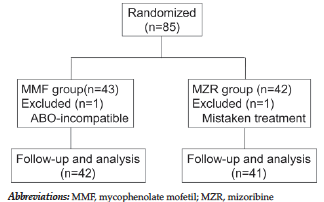
Figure 1. Flow diagram of this randomized study (ITT)
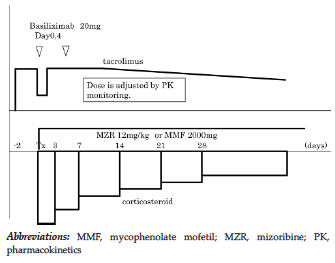
Figure 2. Basic Immunosuppressive Regimens
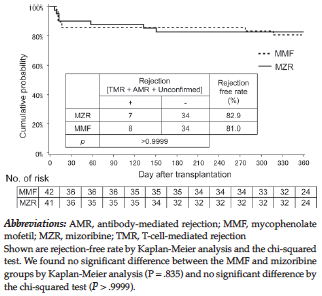
Figure 3. Kaplan-Meier Estimates for Rejection Free Ratio
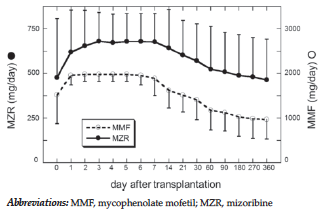
Figure 4. Antimetabolite Doses During the Observation Period After Transplant
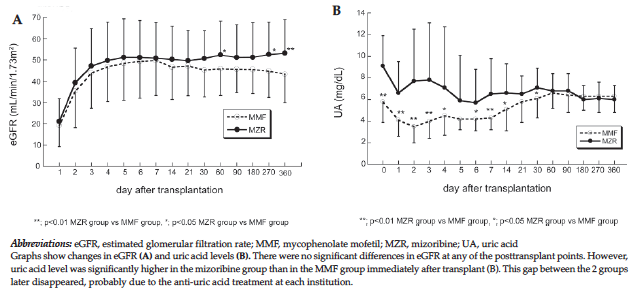
Figure 5. Change in Graft Function Evaluated by Estimated Glomerular Filtration Rate and Uric Acid Levels
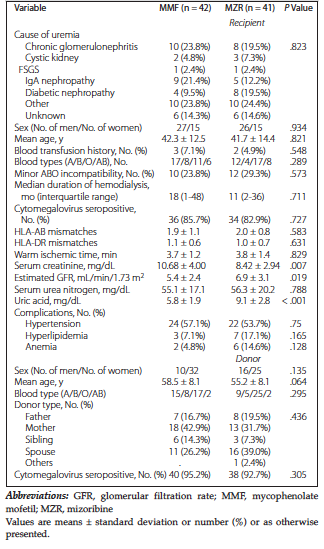
Table 1. Baseline Characteristics
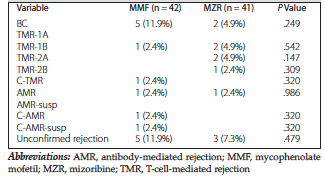
Table 2. Rejection Episodes
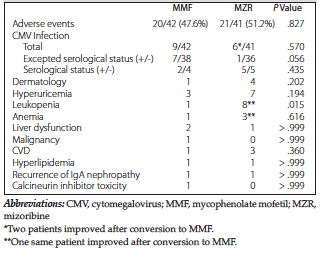
Table 3. Adverse Events