Volume: 16 Issue: 4 August 2018
FULL TEXT
Simultaneous pancreas-kidney transplant is currently standard therapy to achieve long-term insulin-free euglycemia in patients with type 1 diabetes mellitus and concomitant end-stage kidney failure. A patient with symptoms of encephalopathy caused by hyperammonemia and with new-onset iron deficiency anemia was admitted to our institution 20 months after a simultaneous pancreas-kidney transplant. Detailed screening did not reveal any specific cause for the hyperammonemia, and despite standard treatment, hyperammonemia did not resolve. An abdominal computed tomographic scan was performed, which showed a distended duodenal segment of the pancreas graft. This was confirmed during exploratory laparotomy when the anastomosis between duodenum and ileum was dismantled and found not to be stenotic. The excessively long stumps of the duodenum were then dissected and shortened, and a new anastomosis between graft-duodenum and recipient-ileum was created. The operation was followed by an uncomplicated postoperative course in which the serum ammonia normalized on the first postoperative day and remained normal afterwards. An excessively long segment of the duodenum of the pancreatic graft may lead to encephalopathy with hyperammonemia after a simultaneous pancreas-kidney transplant. This emphasizes the need for meticulous preparation of the graft to avoid this complication.
Key words : Back table preparation, Hyperammonemia, Simultaneous kidney and pancreas transplant
Introduction
Simultaneous pancreas-kidney transplant remains the best long-term treatment for patients with type 1 diabetes mellitus and concomitant end-stage renal disease.1,2 Benefits have to be balanced against the potential risks of this complex procedure. Complications require attention during follow-up.3,4 The differential diagnosis can be challenging as immunosuppressive drugs may either trigger or mask surgical complications.5,6 Proper surgical technique of organ procurement, bench surgery, transplant, and dedicated medical management are all crucial to avoid graft loss and minimize patient morbidity and mortality.7 Complications can be vascular, enteric, or even biliary, and must be distinguished from complications because of allograft rejection. Surgical complications also may be responsible for metabolic disorders in the long-term follow-up, as this case illustrates.8-10
Case Report
This is the case of a 44-year-old white woman with insulin-dependent diabetes, presumably type 1, since the age of 10. She had secondary complications: diabetic retinopathy, neuropathy, Charcot foot, and nephropathy. Her father and brother also were affected by insulin-dependent diabetes. She was negative for anti-GAD and anti-IA2 antibodies. Results of genetic screening showed an HNF1A variant of unknown significance (c.526+32 G>A). She began hemodialysis in 2012 and underwent a simultaneous pancreas-kidney transplant with intestinal drainage in August 2012 (1-2-1 mismatch, PRA: 4%, alemtuzumab induction). The postoperative course was uneventful and she was discharged home on the fifth postoperative day. Her only medication consisted of mycophenolic acid 360 mg twice daily, tacrolimus 0.5 mg twice daily, and metoprolol 25 mg once daily.
In April 2014, she presented with sudden onset confusion and vomiting. She experienced a mild episode of diarrhea in the preceding weeks. She was disoriented in time and person, had trouble finding the right words for objects, and she had an asterixis. A diffuse encephalopathy was diagnosed. Computed tomography scan, lumbar puncture, and blood and urine analyses ruled out a cerebrovascular event as an infectious cause. Laboratory results showed new onset microcytic anemia due to iron deficiency (drop in hemoglobin from 7.4 to 5.5 mmol/L in 1 month, drop in major cell volume from 85 to 80 fL (femtoliters), ferritin 15 μg/L) and hyperammonemia (102 μmol/L, reference range 11-48 μmol/L). Biochemical analysis of the function of the kidney and pancreas graft was unremarkable. The liver enzymes were normal. She had a long standing mild thrombocytopenia since the time of the simultaneous kidney and pancreas transplant (86 × 109/L, reference range 150-400 × 109/L). She was admitted and treated with protein restriction and lactulose (orally 3 times daily 15 mL) for metabolic encephalopathy based on hyperammonemia and she received a blood transfusion and Ferrofumaraat.
There were no abnormalities upon analysis of the urea cycle. The results of a gastroscopy and colonoscopy were normal. The result of an abdominal ultrasound showed new onset splenomegaly (craniocaudal length 15.3 cm), normal hepatopetal flow in the portal vein, and normal anatomy of the liver. Invasive hepatic venous pressure gradient measurement showed portal hypertension (hepatic venous pressure gradient of 10 mm Hg). The venous anatomy was normal. There were no signs of a portosystemic shunt. Tacrolimus was switched to cyclosporine based on an association in the literature between veno-occlusive disease and the use of tacrolimus.11 However, a liver biopsy showed only mild aspecific abnormalities (mild hepatocyte injury, steatosis and periportal fibrosis; no hepatitis or veno-occlusive disease or signs of portal hypertension). A computed tomography scan showed gross distension of the duodenal segment of the pancreas graft with accumulation of intestinal content (Figure 1). The distended segment was thought to be the cause of occult intestinal blood loss, which was consistent with the findings of video capsule endoscopy. We hypothesized that the cause of the hyperammonemia was a combination of increased production of ammonia brought on by intestinal bleeding, bacterial overgrowth with fermentation of intestinal content in the distended duodenal segment, and moderate portal hypertension of unknown cause.
On surgery, an excessively long and distended duodenal segment was found (Figure 2 Both stumps of the duodenum were dissected free and shortened by 5 cm each with a gastrointestinal stapler and oversewn with polydioxanone 4/0. Part of the recipient ileum, including the site of the anastomosis, was resected, and a new side-to-side anastomosis was created between the recipient ileum distal and the duodenum of the graft with 2 layers of polydioxanone 4/0.
Finally, hernioplasty was performed for an incisional hernia. Postoperative laboratory findings showed significant improvement in serum ammonia levels from the first postoperative day onward (Figure 3). The patient was discharged home in a good general condition 7 days after surgery, with normal serum laboratory values. A follow-up hepatic vein pressure measurement 9 months later showed that the hepatic venous pressure gradient had normalized to 5 mm Hg. Tacrolimus was restarted without any adverse effect on the ammonia levels.
Discussion
Primary hyperammonemia can be found in hereditary urea cycle enzyme dysfunctions. It also can be caused by liver disease, portal hypertension, organic acidemias, carnitine deficiency, Reye’s syndrome, infections with urea splitting organisms (eg, Helicobacter pylori, Proteus mirabilis), and bacterial flora overgrowth. Furthermore, it can be an event of transjugular intrahepatic portosystemic shunt, total parenteral nutrition, or certain drugs (eg, valproate, carbamazepine, asparagines). It also is observed in uroenteric deviations (eg, uretero-sigmoidostomy).12-14
We present a patient with encephalopathy due to resistant hyperammonemia 2 years after simultaneous pancreas-kidney transplant. Although the patient became asymptomatic following treatment with lactulose, hyperammonemia persisted. The only abnormality that we found was gross distension of the duodenal segment of the pancreatic graft and moderate portal hypertension without signs of a portosystemic shunt. We hypothesized that the cause of the hyperammonemia was a combination of increased production of ammonia brought on by intestinal bleeding, bacterial overgrowth with fermentation of intestinal content in the distended duodenal segment, and moderate portal hypertension of unknown cause. Hyperammonemia normalized after surgical intervention that we believe confirmed our diagnosis. This case emphasizes the
importance of a meticulous back table preparation of the pancreatic graft. It should be considered to keep the graft duodenal stumps as short as possible, keeping in mind that the anastomosis between the graft duodenum and the ileum needs to be long enough to ensure free emptying of any content that can be trapped inside. In our experience the optimal length of the duodenal segment is between 8 and 10 cm in case of the enteric drainage and around 8 cm in case of bladder drainage.
References:
- Ojo AO, Meier-Kriesche HU, Hanson JA, et al. The impact of simultaneous
pancreas-kidney transplantation on long-term patient survival.
Transplantation. 2001;71(1):82-90.
CrossRef - PubMed - Jukema JW, Smets YF, van der Pijl JW, et al. Impact of simultaneous
pancreas and kidney transplantation on progression of coronary
atherosclerosis in patients with end-stage renal failure due to type 1
diabetes. Diabetes Care. 2002;25(5):906-911.
CrossRef - PubMed - Gruessner AC, Sutherland DE. Pancreas transplant outcomes for United
States (US) and non-US cases as reported to the United Network for Organ
Sharing (UNOS) and the International Pancreas Transplant Registry (IPTR) as
of June 2004. Clin Transplant. 2005;19(4):433-455.
CrossRef - PubMed - White SA, Shaw JA, Sutherland DE. Pancreas transplantation. Lancet.
2009;373(9677):1808-1817.
CrossRef - PubMed - Drachenberg CB, Papadimitriou JC, Farney A, et al. Pancreas
transplantation: the histologic morphology of graft loss and clinical
correlations. Transplantation. 2001;71(12):1784-1791.
CrossRef - PubMed - Troppmann C, Gruessner AC, Dunn DL, Sutherland DE, Gruessner RW.
Surgical complications requiring early relaparotomy after pancreas
transplantation: a multivariate risk factor and economic impact analysis of
the cyclosporine era. Ann Surg. 1998;227(2):255-268.
CrossRef - PubMed - Boggi U, Amorese G, Marchetti P. Surgical techniques for pancreas
transplantation. Curr Opin Organ Transplant. 2010;15(1):102-111.
CrossRef - PubMed - Stratta RJ, Sindhi R, Sudan D, Jerius JT, Radio SJ. Duodenal segment
complications in vascularized pancreas transplantation. J Gastrointest Surg.
1997;1(6):534-544.
CrossRef - PubMed - Nath DS, Gruessner A, Kandaswamy R, Gruessner RW, Sutherland DE, Humar
A. Late anastomotic leaks in pancreas transplant recipients - clinical
characteristics and predisposing factors. Clin Transplant.
2005;19(2):220-224.
CrossRef - PubMed - Higgins PD, Umar RK, Parker JR, DiMagno MJ. Massive lower
gastrointestinal bleeding after rejection of pancreatic transplants. Nat
Clin Pract Gastroenterol Hepatol. 2005;2(5):240-244.
CrossRef - PubMed - Chen JL, Lee RC, Shyr YM, et al. Imaging spectrum after pancreas
transplantation with enteric drainage. Korean J Radiol. 2014;15(1):45-53.
CrossRef - PubMed - Navaneethan U, Venkatesh PG. Idiopathic hyperammonemia in a patient with
total pancreatectomy and islet cell transplantation. JOP.
2010;11(6):620-624.
PubMed - Barone GW, Webb JW, Hudec WA. The enteric drained pancreas transplant:
another potential source of gastrointestinal bleeding. Am J Gastroenterol.
1998;93(8):1369-1371.
CrossRef - PubMed - Williams R. Review article: bacterial flora and pathogenesis in hepatic
encephalopathy. Aliment Pharmacol Ther. 2007;25(suppl 1):17-22.
CrossRef - PubMed

Volume : 16
Issue : 4
Pages : 499 - 501
DOI : 10.6002/ect.2016.0028
From the 1Leiden University Medical Centre, Department of Surgery,
Division of Transplantation, and the 2Leiden University Medical
Centre, Department of Nephrology, Hungary
Corresponding author: Dávid Ágoston Kovács, MD, 4032 Móricz Zsigmond krt
22. Debrecen, Hajdú-Bihar, Hungary
Phone: +36 30 313 1469
Fax: +3652255356
E-mail: drkovacsdavid@gmail.com
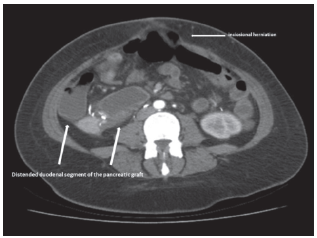
Figure 1. Computed Tomography Scan Showing Distended Segment of Pancreatic Graft Duodenum
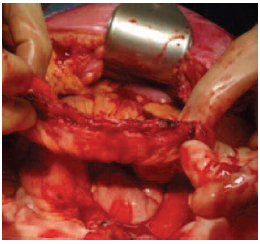
Figure 2. Intraoperative View of Excessively Long Duodenal Segment
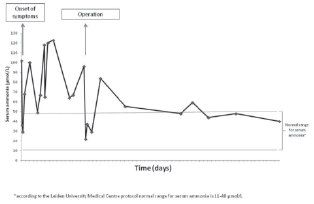
Figure 3. Serum Ammonia Levels During Follow-up