Volume: 13 Issue: 3 November 2015 - Supplement - 3
FULL TEXT
Objectives: We evaluated late intensive care unit admission in liver transplant recipients to identify incidences and causes of acute respiratory failure in the postoperative period and to compare these results with results in patients who did not have acute respiratory failure.
Materials and Methods: We retrospectively screened the data of 173 consecutive adult liver transplant recipients from January 2005 through March 2015 to identify patients with late admission (> 30 d posttransplant) to an intensive care unit. Patients were divided into 2 groups: patients with and without acute respiratory failure. Acute respiratory failure was defined as severe dyspnea, respiratory distress, decreased oxygen saturation, hypoxemia or hypercapnia on room air, or need for noninvasive or invasive mechanical ventilation. Demographic, laboratory, clinical, and respiratory data were collected. Model for End-Stage Liver Disease, Acute Physiology and Chronic Health Evaluation II, and Sequential Organ Failure Assessment scores; lengths of intensive care unit and hospital stays; and hospital mortality were assessed.
Results: Among 173 patients, 37 (21.4%) were admitted to an intensive care unit, including 22 (59.5%) with acute respiratory failure. The leading cause of acute respiratory failure was pneumonia (n = 19, 86.4%). Patients with acute respiratory failure had significantly lower levels of albumin before intensive care unit admission (P = .003). In patients with acute respiratory failure, severe sepsis and septic shock were more frequently observed and tracheotomy was more frequently performed (P = .041).
Conclusions: Acute respiratory failure developed in 59.5% of liver transplant recipients with late intensive care unit admission. The leading cause was pneumonia, with this group of patients having higher requirements for invasive mechanical ventilation and tracheotomy, longer stays in an intensive care unit, and higher mortality.
Key words : Acute respiratory failure, Liver, Transplantation
Introduction
Orthotopic liver transplant (OLT) is currently the only definitive treatment for patients with acute liver failure and end-stage liver disease.1 Most liver transplant recipients are admitted to the intensive care unit (ICU) during the early postoperative period. However, patients may require late ICU admission as a result of respiratory and nonrespiratory causes posttransplant. Reasons for admission include infection, graft failure, vascular problems, and follow-up after surgery other than transplant. Levy and associates reported that 1 adult liver transplant recipient of every 5 requires ICU readmission, with 20% needing more than 1 readmission primarily because of cardiopulmonary deterioration.1
Postoperative respiratory problems are common after OLT and have been reported in 64% to 88% of patients.2-4 Postoperative respiratory complications affect these patients during both the early postoperative period and the long-term period.5 Respiratory problems after OLT may be associated with acute respiratory failure, necessitating ICU admission for respiratory support, including invasive and noninvasive mechanical ventilation. Intensive care unit admission for acute respiratory failure (ARF) after liver transplant is associated with high mortality, morbidity, and increased length of stay in the hospital.5-7
The aim of this study was to evaluate late ICU admission in liver transplant recipients to identify incidences and causes of ARF in the postoperative period and to compare these results with those shown in patients without ARF.
Materials and Methods
We retrospectively screened the data of 173 consecutive adult liver transplant recipients who received their grafts at Baþkent University Transplant Center from January 2005 through March 2015.
In our transplant center, all patients are admitted to transplant ICU during the early postoperative period after OLT, whereas liver transplant recipients who necessitate late ICU admission for any reason are also followed up by the same ICU team.
Among all liver transplant recipients, those admitted to the ICU during the late postoperative period were included for the analysis. Late ICU admission was defined as admission later than 30 days after OLT. Patients admitted to the ICU were divided into 2 groups: those with and without ARF.
Acute respiratory failure was defined as severe dyspnea at rest, respiratory distress, decreased oxygen saturation (<92%), hypoxemia (partial pressure of arterial oxygen < 60 mm Hg) or hypercapnia (partial pressure of arterial carbon dioxide > 60 mm Hg) on room air or requirement of noninvasive or invasive mechanical ventilation.
Patient demographics and characteristics and laboratory, clinical, and respiratory values were collected from our electronic database and patient medical records. Patient demographics and characteristics included age, sex, body weight, Model for End-Stage Liver Disease (MELD) score, Acute Physiology and Chronic Health Evaluation (APACHE) II score, Sequential Organ Failure Assessment score (days 1, 2, and 3), Glasgow Coma scale scores, length of ICU and hospital stays, ICU mortality, hospital mortality, smoking history,and retransplant rates. Laboratory data included hemoglobin, hematocrit, serum urea nitrogen, serum creatinine, albumin, alanine aminotransferase, aspartate aminotransferase, and total bilirubin levels. Laboratory data were collected twice, with our results showing values before ICU admission and at the first test after ICU admission. Clinical data collected were presence of pneumonia, sepsis, severe sepsis, septic shock, and hypotension at ICU admission and presence of acute kidney injury, delirium during ICU stay, and requirements for renal replacement therapy and sedation. We recorded the following respiratory characteristics in the patients: noninvasive or invasive mechanical ventilation requirements, duration of invasive mechanical ventilation, partial pressure of arterial oxygen-to-fraction of inspired oxygen ratio, chest radiographic findings, and requirements of bronchoscopy and tracheotomy.
Pneumonia was defined as the presence of pulmonary infiltrate, fever, leukocytosis, and new onset of respiratory symptoms such as cough, sputum, and dyspnea. Pulmonary secretions, blood, and urine cultures were obtained from all patients with pneumonia. Sepsis, severe sepsis, and septic shock were defined according to American College of Chest Physicians/Society of Critical Care Medicine Consensus Conference Committee criteria.8
Life-sustaining treatments (that is, noninvasive or invasive mechanical ventilation, renal replacement therapy, vasopressors) were instituted at the discretion of the attending physicians. Criteria for noninvasive and invasive mechanical ventilation were determined at the discretion of the attending physicians.
The study protocol complied with the Helsinki Declaration of 1975. The Institutional Ethics Committee approved the protocol.
Statistical analyses
Statistical analyses were performed with SPSS software (SPSS: An IBM Company,
version 20.0, IBM Corporation, Armonk, NY, USA). All results are expressed as
mean ± SD or as number and percentage. Mann-Whitney U and chi-square tests or
Fisher exact test were used to compare means and proportions. All P
values are 2-sided. P < .05 was considered statistically significant in
this study.
Results
From January 2005 to March 2015, a total of 358 liver transplants were performed at Baþkent University Hospital in Ankara, Turkey. Patients younger than 18 years (n = 185) were excluded. The medical records of 173 adult liver transplant recipients were retrospectively evaluated. The patient flow chart is shown in Figure 1.
Among 173 adult liver transplant recipients, 30.1% of patients received livers from deceased donors and 29.5% were female. The mean age was 43.6 years. In the group of 173 patients, 37 (21.4%) were admitted to the ICU, including 22 patients (59.5%) with ARF.
The main patient demographics and characteristics are presented in Table 1. There were no statistically significant differences between groups regarding age, sex, body weight, and mean MELD score (P > .05 for all). The mean APACHE II and first 3-day Sequential Organ Failure Assessment scores at ICU admission were higher in patients with ARF than in those without ARF (P = .002, P = .107,P = .053, P = .101). Glasgow Coma scales of patients with ARF were significantly lower than those shown in patients without ARF (P = .009). The lengths of ICU stays (P = .002) and hospital stays (P = .146) were longer in patients with ARF. The length of ICU stay was increased by approximately 4-fold in patients with ARF. When compared with patients without ARF, ICU mortality was significantly higher in patients with ARF (P = .002). Intensive care unit mortality was increased approximately 9-fold in patients with ARF. Overall hospital mortality was higher in patients with ARF (P = .162). Smoking addiction was higher in this group (P = .210). One patient was retransplanted in each group (P = .089).
Patient laboratory data are presented in Table 2. At first test after ICU admission, hemoglobin (P = .005) and hematocrit (P = .012) levels of patients with ARF were significantly lower than in patients without ARF. After ICU admission, serum urea nitrogen (P = .001) and creatinine (P = .026) levels of patients with ARF were significantly higher than in patients without ARF. Before ICU admission, patients with ARF had significantly lower levels of albumin (P = .003) and significantly higher levels of aspartate aminotransferase (P = .044) than those without ARF. Patient clinical data are presented in Table 3. The leading cause of ARF was pneumonia (n = 19,86.4%) followed by pulmonary thromboembolism (n = 2, 9.1%) and cardiogenic pulmonary edema (n = 1, 4.5%). The leading causes of ICU admission in patients without ARF were intra-abdominal infection (n = 6, 40.0%), bleeding from vascular anastomosis (n = 5, 33.3%), follow-up after surgery for graft revision (n = 3, 20.0%), and pneumonia (n = 1, 6.7%). Pneumonia incidence in patients with ARF was increased approximately 13-fold (19 patients [86.4%] vs 1 patient [6.7%]; P < .001). Severe sepsis and septic shock were more frequently observed in ARF patients than in patients without ARF (in 20 patients [90.9%] vs 5 patients [33.3%]; P = .001, and in 18 patients [81.8%] vs 4 patients [26.7%]; P = .002). Patients with ARF were more hypotensive at ICU admission than those without ARF (P = .035). They had higher sedation requirements and delirium incidences than patients without ARF (18 patients [81.8%] vs 5 patients [33.3%]; P = .005, and 8 patients [40.0%] vs 1 patient [6.7%]; P = .048). In the ARF group, there were more patients with acute kidney injury (17 patients [77.3%] vs 7 patients [46.7%]; P = .083) and more patients needing renal replacement therapy (19 patients [86.4%] vs 9 patients [60%]; P = .118) than in the group without ARF.
Patient respiratory characteristics are shown in Table 4. Patients with ARF had less need for noninvasive mechanical ventilation (1 patient [5.9%] vs 4 patients [26.6%]; P = .130) but greater need for invasive mechanical ventilation (21 patients [95.5%] vs 10 patients [66.7%]; P = .031). Almost all patients with ARF needed invasive mechanical ventilation. Duration of invasive mechanical ventilation in patients with ARF was longer than in patients without ARF (19.7 vs 3.6 d; P < .001). Partial pressure of arterial oxygen-to-fraction of inspired oxygen ratio in ARF patients was lower than that shown in patients without ARF (196.9 ± 49.1 vs 260.6 ± 140.2; P = .062). Compared with patients without ARF, tracheotomy was more frequently performed in patients with ARF (59.1% vs 20% of patients; P = .041). We also found fiberoptic bronchoscopy to be more frequently used in patients with ARF (40.9% vs 33.3% of patients; P = .054). Patients with ARF had more frequent bilateral opacity in chest radiographs than patients without ARF (72.7% vs 7.1% of patients; P < .001).
Discussion
In this retrospective analysis, we evaluated 37 adult transplant recipients who had late ICU admissions. We found that ARF occurred in more than half of these patients. The leading cause of ARF was pneumonia, with an incidence of 86.4%, and requirements of invasive mechanical ventilation and tracheotomy were more frequent in patients with ARF than in those without ARF. Severe sepsis and septic shock were more frequently observed in patients with ARF. In addition, length of ICU stay and ICU mortality were significantly increased in the ARF group.
In our series of liver transplant recipients admitted to the ICU more than 30 days after OLT, clinical and respiratory data demonstrated that patients with ARF had poor status compared with patients without ARF. These patients also had higher morbidity and mortality rates with life-sustaining treatment requirements.
Pirat and associates5 retrospectively collected data of 44 OLT patients older than 16 years who received a transplant at our center between 1995 and 2002. They found that 26 patients (59.1%) developed at least 1 respiratory complication during the early postoperative period. The most frequent complication was pleural effusion, followed by atelectasis and pneumonia. Five patients (11.4%) developed ARF. Advanced patient age and higher intraoperative transfusion requirements were important predictors of pulmonary complications. Pneumonia was associated with a poor prognosis in this patient group.5 In our group of patients admitted to ICU during the late postoperative period, the incidence of ARF was high and pneumonia was the leading cause of ARF, with increased mortality. When compared with the study by Pirat and associates, which analyzed early respiratory problems after liver transplant, we observed a 6-fold increase in the incidence of ARF during late ICU admission.
Bozbas and associates6 retrospectively evaluated the first 114 patients older than 16 years who had liver transplants at our center up to the end of 2007. Pulmonary complications were detected in 48 patients (42.1%). The proportion of patients with pneumonia was 21.1%, and the proportion of patients with pleural effusion was 18.4%. Twenty patients died in the early postoperative period (< 90 d), and 9 patients died during the late postoperative period (> 90 d). They found time to extubation, positive deep tracheal aspirate culture, and postoperative pulmonary complications to be predictors of early and late mortality. The length of stay in the ICU was related to early mortality, and the length of stay in hospital was related to late mortality. The mortality rate was higher in patients who had developed pulmonary complications.6 Similar to that shown in the study by Bozbas and associates, we observed a higher ICU mortality in patients with ARF at late ICU admission than in those without ARF.
Lin and associates9 retrospectively analyzed 107 patients who underwent OLT during their first postoperative month. The proportion of patients with postoperative pulmonary complications was 60.7%, with these complications mainly being pleural effusion, pneumonia, pulmonary edema, and atelectasis. Overall mortality was shown to be 13.1%, with pulmonary causes accounting for 85.7% of deaths. The mortality rate was increased 3.9-fold in patients with pulmonary complications. Acute respiratory failure was shown in 10.3% of patients. Independent risk factors for pulmonary complications were a preoperative MELD score ≥ 25, intraoperative fluid administration volume > 10 L, and blood transfusion volume > 4 L. They also concluded that a fluid balance of ≤ -300 mL for more than 2 days of the first 3 days after surgery was protective. They suggested that restricting intraoperative fluids and transfusion and a negative fluid balance for the first 3 days after surgery could decrease postoperative pulmonary complications.9 The incidence of ARF was higher in our group of patients. The reason might be due to higher APACHE II scores of our patients, indicating greater disease severity because of severe sepsis and septic shock that accompanied pneumonia. Lin and associates found results similar to our study regarding the relation between pulmonary complications and mortality.
Tenza and associates10 retrospectively evaluated 74 liver transplant patients to determine factors that influenced 6-month outcomes of their recipients. Patient survival at 6 months was 86%, with mortality caused by postoperative sepsis in 6 of 10 patients. An independent negative predictive factor was serum urea nitrogen level during ICU stay in patients with late ICU admission.10 In our group of patients with ARF, severe sepsis and septic shock were more frequently observed, with 17 of 22 patients with ARF having increased levels of serum urea nitrogen and creatinine due to renal dysfunction.
In a recent study, Levesque and associates7 analyzed 212 adult patients with elective liver transplant at a single center. During the postoperative period, 22% of patients developed pneumonia, of which 43% developed respiratory failure requiring mechanical ventilation. Age of recipients, MELD score, primary disease, platelet count, restrictive lung pattern, and intraoperative blood transfusion were associated with pneumonia. Restrictive lung pattern and preoperative international normalized ratio levels were independent predictors of pneumonia. They concluded that pneumonia is a common complication after liver transplant and is a major cause of postoperative morbidity and mortality and contributes to a longer hospital stay.7 The authors highlighted that pneumonia and respiratory failure resulted in a worse outcome in adult patients with elective liver transplant. Their results regarding pneumonia as the leading cause of ARF was similar to our study. However, in our series, invasive mechanical ventilation was used in almost in all patients and tracheotomy was performed because of prolonged duration of mechanical ventilation.
McElroy and associates11 recently published an excellent meta-analysis. This analysis of 29 227 recipients of deceased-donor liver transplants from 74 studies identified 17 types of postoperative complications. The main pulmonary complications were pneumonia (n = 1966), pulmonary edema (n = 457), and pleural effusion (n = 334). They also stated that the postoperative pneumonia rate could be reduced by systematic and intensive pulmonary rehabilitation, described in general surgery patients.11 Almost one-quarter of the analyzed studies were associated with pulmonary complications, with these studies stating that the complications could be prevented by rehabilitation. As in the meta-analysis, our series also identified pneumonia as the main cause of ARF. However, we did not analyze data regarding pulmonary rehabilitation of our patients with respiratory failure during ICU stay.
Gonzalez and associates12 studied occurrence of ARF in 340 liver transplant recipients. They found that 19.5% of the patients had ARF. Respiratory infection was the most relevant risk factor during posttransplant.12 The authors documented a relation between respiratory infection and ARF. Similar to their conclusion, we found a strong correlation between the development of respiratory failure and pneumonia.
Karapanagiotou and associates13 retrospectively analyzed 79 OLT patients with respect to acute kidney injury. Almost one-third of their patients had acute kidney injury that required renal replacement therapy. Patients with acute kidney injury had a greater need for prolonged mechanical ventilation, increased length of stay in the ICU, and higher infection and mortality rates.13 Among our liver transplant recipients, similar findings were seen regarding increased incidence of acute kidney injury in patients with ARF compared with those without ARF. In addition, we found a longer duration of mechanical ventilation with increased ICU mortality in the ARF group.
Wang and associates14 retrospectively studied 78 living-donor liver transplant patients about incidence and risk factors for delirium. Almost one-half of the patients had an episode of delirium. Patients with APACHE II scores ≥ 16 and invasive mechanical ventilation longer than 5 days had greater risk for delirium. Patients with delirium had longer lengths of stay in the ICU and hospital.14 Similar to the study by Wang and associates, our liver transplant recipients admitted to ICU with ARF had higher incidence of delirium, with lengths of stay in the ICU and hospital also increased.
Pirat and associates15 studied percutaneous dilational tracheotomy for prolonged mechanical ventilation due to ARF in solid-organ recipients, including 2 patients with liver transplant. Patients with and without ARF who require a tracheotomy due to prolonged mechanical ventilation received percutaneous dilational tracheotomies. However, compared with patients without ARF, tracheotomy was more frequently performed in patients with ARF.
The incidence of pneumonia in patients with OLT has been documented to be around 15% to 20%. Acute respiratory failure because of pneumonia after OLT may occur in 50% to 70% of patients.7,16 In liver transplant recipients, the incidence of ARF is high. Major upper abdominal surgery, excessive intravascular volume shifts, preoperative patient status, and high incidence of postoperative pneumonia are main determinants of ARF in liver transplant patients.17 However, the incidence of pneumonia was higher (95.5%) in our patients with ARF, perhaps due to higher APACHE II, MELD, and Sequential Organ Failure Assessment scores during ICU admission, with an increased incidence of severe sepsis and septic shock.
Our study has some limitations. First, this was a retrospective study. In addition, patient medical records were lacking. Although our study period was long, there were few differences between patients regarding anesthesia, surgery, and ICU approaches. In addition, some members of our transplant team had changed. Liver transplant is a continually evolving science. Some scientific and technical improvements in recent years could have affected patient morbidity, mortality, and outcomes. Data on patient socioeconomic status, treatment compliance, and treatment follow-up were also lacking.
In conclusion, ARF developed in 59.5% of our liver transplant recipients with late ICU admission. The leading cause of ARF was pneumonia, with patients with ARF having a higher need for invasive mechanical ventilation and tracheotomy. The length of ICU stay was longer and mortality was higher in patients with ARF than in those without ARF.
References:
- Levy MF, Greene L, Ramsay MA, et al. Readmission to the intensive care
unit after liver transplantation. Crit Care Med. 2001;29(1):18-24.
CrossRef - PubMed - Feltracco P, Carollo C, Barbieri S, Pettenuzzo T, Ori C. Early
respiratory complications after liver transplantation. World J
Gastroenterol. 2013;19(48):9271-9281.
CrossRef - PubMed - Zeyneloglu P. Respiratory complications after solid-organ
transplantation. Exp Clin Transplant. 2015;13(2):115-125.
PubMed - De Gasperi A, Feltracco P, Ceravola E, Mazza E. Pulmonary complications
in patients receiving a solid-organ transplant. Curr Opin Crit Care.
2014;20(4):411-419.
CrossRef - PubMed - Pirat A, Ozgur S, Torgay A, Candan S, Zeyneloglu P, Arslan G. Risk
factors for postoperative respiratory complications in adult liver
transplant recipients. Transplant Proc. 2004;36(1):218-220.
CrossRef - PubMed - Bozbas SS, Eyuboglu FO, Ozturk Ergur F, et al. Pulmonary complications
and mortality after liver transplant. Exp Clin Transplant.
2008;6(4):264-270.
PubMed - Levesque E, Hoti E, Azoulay D, et al. Pulmonary complications after
elective liver transplantation-incidence, risk factors, and outcome.
Transplantation. 2012;94(5):532-538.
CrossRef - PubMed - Bone RC, Balk RA, Cerra FB, et al. Definitions for sepsis and organ
failure and guidelines for the use of innovative therapies in sepsis. The
ACCP/SCCM Consensus Conference Committee. American College of Chest
Physicians/Society of Critical Care Medicine. Chest. 1992;101(6):1644-1655.
CrossRef - PubMed - Lin YH, Cai ZS, Jiang Y, Lu LZ, Zhang XJ, Cai QC. Perioperative risk
factors for pulmonary complications after liver transplantation. J Int Med
Res. 2010;38(5):1845-1855.
CrossRef - PubMed - Tenza E, Bernardo CG, Escudero D, et al. Liver transplantation
complications in the intensive care unit and at 6 months. Transplant Proc.
2009;41(3):1050-1053.
CrossRef - PubMed - McElroy LM, Daud A, Davis AE, et al. A meta-analysis of complications
following deceased donor liver transplant. Am J Surg. 2014;208(4):605-618.
CrossRef - PubMed - Gonzalez E, Galan J, Villalain C, Valero JC, Silla I, Rodriguez G. [Risk
factors for acute respiratory failure after liver transplantation]. Rev Esp
Anestesiol Reanim. 2006;53(2):75-81.
PubMed - Karapanagiotou A, Kydona C, Dimitriadis C, et al. Acute kidney injury
after orthotopic liver transplantation. Transplant Proc.
2012;44(9):2727-2729.
CrossRef - PubMed - Wang SH, Wang JY, Lin PY, et al. Predisposing risk factors for delirium
in living donor liver transplantation patients in intensive care units. PLoS
One. 2014;9(5):e96676.
CrossRef - PubMed - Pirat A, Zeyneloglu P, Candan S, Akkuzu B, Arslan G. Percutaneous
dilational tracheotomy in solid-organ transplant recipients. Transplant
Proc. 2004;36(1):221-223.
CrossRef - PubMed - Weiss E, Dahmani S, Bert F, et al. Early-onset pneumonia after liver
transplantation: microbiological findings and therapeutic consequences.
Liver Transpl. 2010;16(10):1178-1185.
CrossRef - PubMed - Kotloff RM. Noninfectious pulmonary complications of liver, heart, and
kidney transplantation. Clin Chest Med. 2005;26(4):623-629, vii.
CrossRef - PubMed

Volume : 13
Issue : 3
Pages : 15
DOI : 10.6002/ect.tdtd2015.O10
From the 1Department of Anesthesiology and Reanimation and the
2Department of General Surgery, Baþkent University Faculty of
Medicine, Ankara, Turkey
Acknowledgements: The authors declare that they have no sources of
funding for this study, and they have no conflicts of interest to declare.
Corresponding author: Ender Gedik, Department of Anesthesiology and
Reanimation, Baþkent University Faculty of Medicine, Baskent University
Hospital, Fevzi Cakmak Caddesi, No: 45, 06490 Ankara, Turkey
Phone: +90 312 203 6868 ext. 4841
Fax: +90 312 223 7333
E-mail: gedikender@gmail.com
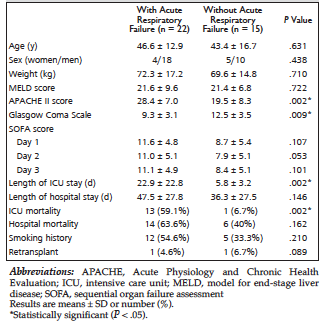
Table 1. Patient Demographics and Characteristics
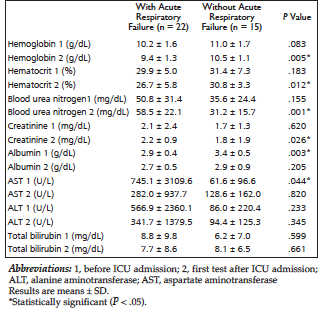
Table 2. Patient Laboratory Results
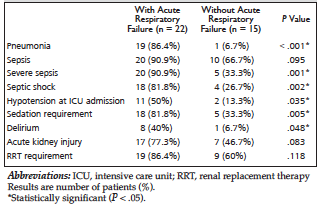
Table 3. Patient Clinical Data
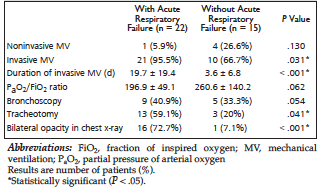
Table 4. Respiratory Characteristics of the Patients
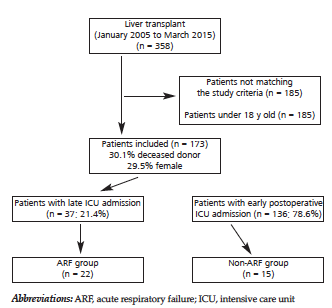
Figure 1. Patient Flow Chart