Volume: 13 Issue: 3 November 2015 - Supplement - 3
FULL TEXT
Objectives: Acute kidney injury is a frequent complication after orthotopic cardiac transplant. We aimed to describe the risk factors for acute kidney injury after cardiac transplant according to Kidney Disease: Improving Global Outcomes criteria.
Materials and Methods: We retrospectively studied a population-based cohort of cardiac transplant recipients (aged > 12 y) at Baþkent University between February 2003 and January 2015. Of 94 patients, 64 were evaluated and included in the study. The main outcome was acute kidney injury, defined and classified according to Kidney Disease: Improving Global Outcomes criteria, during 7 postoperative days. Other outcomes included risk factors, use of renal replacement therapy, postoperative complications, mortality, and kidney recovery.
Results: Mean age at transplant was 34.14 ± 16.30 years, and 45 patients (70.32%) were men. Acute kidney injury developed in 34 (53.12%) of 64 cardiac transplant recipients, with severity classified as stage 1 in 10 (15.62%), stage 2 in 14 (21.87%), and stage 3 in 10 (15.62%). Renal replacement therapy was given to 25 patients (39.06%). Patients with acute kidney injury were significantly older (40.41 ± 15.85 y vs 27.03 ± 13.91 y; P = .001), had larger body surface area (1.78 ± 0.28 m2 vs 1.61 ± 0.31 m2; P = .033), and more frequently had a history of hypertension (P = .011) and smoking (P = .007) than did patients without acute kidney injury. They also had lower intraoperative urine output (453.380 ± 266.85 mL) than did patients who did not develop acute kidney injury (632.33 ± 430.94 mL (P = .01).
Conclusions: According to the Kidney Disease: Improving Global Outcomes criteria, acute kidney injury occurs in more than 50% of heart transplant patients postoperatively. Older age, larger body surface area, and history of hypertension and smoking are associated with acute kidney dysfunction following orthotopic heart transplant.
Key words : Acute kidney dysfunction, Heart transplant, Kidney staging, KDIGO criteria
Introduction
Orthotopic cardiac transplant (OCT) has emerged as the preferred treatment for patients with a variety of conditions resulting in end-stage heart failure. This procedure can prolong life expectancy and improve quality of life.1 Despite significant improvements in both short- and long-term mortality; however, medical complications after OCT contribute to significant morbidity and mortality in these patients.2,3 Orthotopic cardiac transplant recipients are vulnerable to developing acute kidney dysfunction.3-5 The incidence of acute kidney dysfunction after OCT ranges from 6.0% to 70.4% of patients, of whom 28% to 85% require renal replacement therapy. These patients have a higher mortality rate of ≤ 50% and are at increased risk for developing end-stage renal disease.1,5-7 Acute kidney injury (AKI) after OCT is multifactorial, and several studies have identified calcineurin inhibitor therapy (cyclosporine and tacrolimus), duration of cardiopulmonary bypass, preoperative serum creatinine (SCr), albumin, insulin-dependent diabetes, and transfusion requirement as risk factors.6-9
The Kidney Disease: Improving Global Outcomes (KDIGO) Clinical Practice Guideline for the Evaluation and Management of Chronic Kidney Disease was released in 2012.10 However, no data are available on the occurrence and risk factors of AKI after OCT using these criteria. This study aimed to apply the KDIGO criteria to patients who developed AKI after OCT, and to compare patients with and without AKI to determine the incidence and risk factors of AKI.
Materials and Methods
We retrospectively analyzed the records of all patients who underwent OCT from February 2003 to January 2015 at Baþkent University Hospital. Patients younger than 12 years of age, those with chronic kidney disease, and those who died within the first week after transplant were excluded. Of the total population (N = 94), 64 patients were evaluated. For all patients, the same surgical techniques and postoperative care protocols were used by the same surgical and intensive care teams. Preoperative demographic characteristics included age, sex, weight, and body mass index. Cardiac parameters included ejection fraction, echocardiographic findings, and pulmonary artery pressure. Other data collected from hospital records included blood type; comorbidities (eg, diabetes mellitus, hypertension, hyperlipidemia, obesity, coronary artery disease, chronic obstructive lung disease); laboratory values; intraoperative urine output; transfusion requirements; cardiopulmonary bypass; cross-clamp and ischemia times; postoperative creatinine levels; and need for renal replacement therapies. The study was approved by the Ethical Review Committee of the Institute. All of the protocols conformed to the ethical guidelines of the 1975 Helsinki Declaration. Written informed consent was obtained from all subjects.
All patients received induction therapy consisting of corticosteroids: intravenous methylprednisolone (500 mg) administered intraoperatively before reperfusion of the allograft, followed by a tapering regimen of methylprednisolone or prednisone. Mycophenolate mofetil (1 g/d) and calcineurin inhibitors were introduced just before the operation (tacrolimus 10 ng/kg orally; target trough: 5-20 ng/mL) and given for the rest of their lives). The standard perioperative antimicrobial regimen was given, consisting of prophylactic cefazolin sodium for 3 days. Daily sulfamethoxazole (400 mg) and trimethoprim (80 mg), and ganciclovir were given for 3 months (4 mg/kg). This regimen was individualized according to the results of perioperative blood, urine and wound cultures.
The KDIGO criteria were used to evaluate acute kidney dysfunction after OCT. The KDIGO criteria recognize 3 stages of AKI severity, based on SCr level and urine output. Patients were categorized into stage 1 if their SCr levels increased > 0.3 mg/dL or by 150% to 200% (1.5- to 1.9 2.0-fold) from baseline within 48 hours, or if their urine output was < 0.5 mL/kg/hour for 6 hours. Patients were said to be in stage 2 if their SCr levels increased > 2 to 2.9 times baseline levels, or if their urine output was < 0.5 mL/kg/hour for 12 hours. They were in stage 3 if their SCr levels increased > 3 times baseline, if their SCr increased to > 4.0 mg/dL, if they required renal replacement therapy, if their urine output was < 0.3 mL/kg/hour for 24 hours, or if anuria lasted > 12 hours (Table 1).
Statistical analyses were performed with SPSS software (SPSS: An IBM Company, version 17.0, IBM Corporation, Armonk, NY, USA). The groups were compared using the chi-square test and the Mann-Whitney U test when appropriate. A probability value of P < .05 was considered significant. Data were expressed as mean values ± standard deviation for continuous variables, and as percentages for categorical variables.
Results
Between February 2003 and January 2015, a total of 94 patients underwent OCT at our institution, and 64 of these transplant recipients were included in the final analysis (Table 2). The mean age at transplant was 34.14 ± 16.30 years, and 45 of the patients (70.32%) were men. The incidence of AKI was 53.12% (n = 34), and its severity was classified as stage 1 in 10 patients (15.62%), stage 2 in 14 patients (21.87%), and stage 3 in 10 patients (15.62%). Renal replacement therapy was administered to 25 (73.52%) of 34 patients with AKI.
Patients with AKI were significantly older than patients without AKI (40.41 ± 15.85 y vs 27.03 ± 13.91 y; P = .001), had larger body surface area (1.78 ± 0.28 m2 vs 1.61 ± 0.31 m2; P = .033), and more frequently had a history of hypertension (91.18% vs 8.82%; P = .011) and smoking (97.07 97.06% vs 2.94%; P = .007). Patients with AKI also had lower intraoperative urine output compared with non-AKI patients (453.38 ± 266.85 mL vs 632.33 ± 430.94 mL; P = .01).
Other parameters did not show significant differences between the AKI and non-AKI groups. Because we excluded patients who died within the first week after transplant, the mortality rates of patients with and without AKI were not calculated.
Discussion
We performed this retrospective, population-based cohort study of all patients who underwent OCT in our center to describe the incidence, severity, risk factors, and outcomes associated with AKI. Our single-center study demonstrated that AKI occurred in more than half (53.12%) of heart transplant recipients during the early postoperative period. Based on KDIGO criteria, the prevalence of AKI in these patients was 15.62% in stage 1, 21.87% in stage 2, and 15.62% in stage 3. Patients who developed AKI after OCT tended to be older, had a larger body surface area, and more frequently had a history of hypertension and smoking.
Altered kidney function after OCT is common. In these patients, AKI can be caused by several factors: inadequate organ perfusion related to preoperative and postoperative low cardiac output, long ischemia and cardiopulmonary bypass times, hypothermia, and the effects of immunosuppressive drugs. A large series of transplanted patients demonstrated an overall incidence of acute kidney dysfunction (acute kidney dysfunction involves all kind of acute problems related to kidney including AKI; this explanation is also for LJS21, 22, and 27) ranging from 6% to 70.4%, based on different inclusion criteria.4,5,7 The KDIGO criteria have standardized the diagnosis of acute kidney dysfunction and created a staging system that ranges from minor changes in renal function to requirement for renal replacement therapy; these criteria have been adopted by clinicians caring for cardiac surgery patients. By applying these criteria carefully after OCT, and watching for any changes in the patient’s status, morbidity and mortality due to AKI can be diminished.
Previously, AKI was evaluated mainly using 2 systems: the Risk, Injury, Failure, Loss and End-Stage Kidney Disease (RIFLE) classification system and the Acute Kidney Injury Network (AKIN) criteria.8 There were no data about the occurrence and risk factors of AKI after OCT, based on the KDIGO criteria.
We found older age, larger body surface area, a history of hypertension and smoking, and lower intraoperative urine output to be risk factors for AKI after OCT, based on the KDIGO criteria. In addition, the risk based on these variables tended to increase along with KDIGO stage (except for intraoperative urine output). As age and body surface area increased, and as hypertension and smoking figured more prominently in the patient’s history, AKI severity according to KDIGO criteria also advanced significantly (P < .05). Even lower intraoperative urine output levels were meaningful factors in patients with stage 1 to 3 AKI (P = .002), though this correlation did not apply between stages 2 and 3.
Our study showed an association between the development of AKI after heart transplant and intraoperative high blood pressures, which might have caused renal artery stenosis and resulted in decreased kidney perfusion. Poor preoperative renal function and perioperative hemodynamic compromise possibly predisposes heart transplant recipients to develop AKI. Gude and associates reported that, as preoperative hemodynamics improve over time, better preoperative renal function may be observed over the years.2
The limitations of our study resulted from it being a retrospective, single-center study that enrolled a small number of patients.
In conclusion, AKI is one of the most common complications among heart transplant recipients. Older age, larger body surface area, a history of hypertension or smoking, and lower intraoperative urine output were all found to be risk factors for AKI after OCT. Thus, strategies for preserving renal function have the potential to improve patient prognosis after transplant.
References:
- Escoresca Ortega AM, Ruíz de Azúa López Z, Hinojosa Pérez R, et al.
Kidney failure after heart transplant. Transplant Proc.
2010;42(8):3193-3195.
CrossRef - PubMed - Gude E, Andreassen AK, Arora S, et al. Acute renal failure early after
heart transplant: risk factors and clinical consequences. Clin Transplant.
2010;24(6):E207-E213.
CrossRef - PubMed - Al Aly Z, Abbas S, Moore E, et al. The natural history of renal function
following orthotopic heart transplant. Clin Transplant 2005;19(5):683-689.
CrossRef - PubMed - Szelkowski LA, Puri NK, Singh R, Massimiano PS. Current trends in
preoperative, intraoperative, and postoperative care of the adult cardiac
surgery patient. Curr Probl Surg. 2015;52(1):531-569.
CrossRef - PubMed - Rafat C, Hertig A, Rondeau E. Renal impairment an impediment to heart
transplant? Iran J Kidney Dis. 2015;9(2):77-83.
PubMed - De Santo LS, Romano G, Amarelli C, et al. Implications of acute kidney
injury after heart transplant: what a surgeon should know. Eur J
Cardiothorac Surg. 2011;40(6):1355-1361; discussion 1361.
PubMed - Ojo AO, Held PJ, Port FK, et al. Chronic renal failure after transplant
of a nonrenal organ. N Engl J Med. 2003;349(10):931-940.
CrossRef - PubMed - Türker M, Zeyneloglu P, Sezgin A, Pirat A, Arslan G. RIFLE criteria for
acute kidney dysfunction following heart transplant: incidence and risk
factors. Transplant Proc. 2013;45(10):3534-3537.
CrossRef - PubMed - Flechner SM, Kobashigawa J, Klintmalm G. Calcineurin inhibitor–sparing
regimens in solid organ transplant: focus on improving renal function and
nephrotoxicity. Clin Transplant. 2008;22(1):1-15.
PubMed - Levin A, Stevens PE, Bilous RW, et al. Kidney Disease: Improving Global Outcomes (KDIGO) CKD Work Group. KDIGO 2012 clinical practice guideline for the evaluation and management of chronic kidney disease. Kidney Int. 2013(Suppl 3):1-150.

Volume : 13
Issue : 3
Pages : 26 - 29
DOI : 10.6002/ect.tdtd2015.O15
From Baþkent University Faculty of Medicine, Department of Cardiovascular
Surgery, Ankara, Turkey
Acknowledgements: The authors of this manuscript have no conflicts of
interest to disclose. No sources of funding were used to conduct this study or
prepare this manuscript.
Corresponding author: Bahadýr Gültekin, Baþkent Üniversitesi Týp
Fakültesi Ankara Hastanesi, Kalp ve Damar Cerrahisi Anabilim Dalý, Fevzi Cakmak
Cad., 10. Sok, No. 45, Bahçelievler, 06490, Ankara, Turkey
Phone: +90 312 203 6868 (1373); +90 505 780 5733
Fax: +90 312 223 7333
E-mail: bahadirg2002@gmail.com
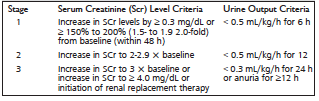
Table 1. Classification of Acute Kidney Injury According to KDIGO Criteria

Table 2. Characteristics of Patients Who Developed Acute Kidney Injury (n = 34)