Volume: 13 Issue: 3 November 2015 - Supplement - 3
FULL TEXT
Objectives: Heart transplant is the best treatment for end-stage heart failure. Respiratory insufficiency after heart transplant is a potentially serious complication. Pulmonary complications, pulmonary hypertension, allograft failure or rejection, and structural heart defects in the donor heart are among the causes of hypoxemia after transplant. In this study, we evaluated the prevalence of hypoxemia and respiratory insufficiency in patients with orthotopic heart transplant during the early postoperative period.
Materials and Methods: We retrospectively evaluated the medical records of 45 patients who had received orthotopic heart transplant at our center. Clinical and demographic variables and laboratory data were noted. Oxygen saturation values from patients in the first week and the first month after transplant were analyzed. We also documented the cause of respiratory insufficiency and the type of treatment.
Results: Mean age was 35.3 ± 15.3 years (range, 12-61 y), with males comprising 32 of 45 patients (71.1%). Two patients had mild chronic obstructive pulmonary disease and 1 had asthma. Twenty-five patients (55.6%) had a history of smoking. Respiratory insufficiency was noted in 9 patients (20%) during the first postoperative week. Regarding cause, 5 of these patients (11.1%) had pleural effusion, 2 (4.4%) had atelectasis, 1 (2.2%) had pneumonia, and 1 (2.2%) had acute renal failure. Therapies administered to patients with respiratory insufficiency were as follows: 5 patients had oxygen therapy with nasal canula/mask, 3 patients had continuous positive airway pressure, and 1 patient had mechanical ventilation. One month after transplant, 2 patients (4.4%) had respiratory insufficiency 1 (2.2%) due to pleural effusion and 1 (2.2%) due to atelectasis.
Conclusions: Respiratory insufficiency is a common complication in the first week after orthotopic heart transplant. Identification of the underlying cause is an important indicator for therapy. With appropriate care, respiratory insufficiency can be treated successfully.
Key words : Heart transplant, Hypoxia, Respiratory complications, Pleural effusion
Introduction
Despite the best available medical therapy, patients with end-stage heart failure have a poor prognosis.1 Heart transplant is the best therapy for patients with end-stage heart failure,2,3 improving both survival and quality of life.
Even with major advances in surgical techniques, immunosuppressive agents, and hospital care, respiratory complications are still common after solid-organ transplant,4 including after heart transplant. Duration of heart failure, multiple organ failure, need for extracorporeal therapies, immunosuppressive agents, and comorbid conditions are among the risk factors leading to pulmonary complications and respiratory insufficiency.5 Respiratory insufficiency after heart transplant can be a serious complication. Pulmonary complications, pulmonary hypertension, allograft failure or rejection, and structural heart defects in the donor heart are among the causes of hypoxemia in the postoperative period.
In this study, we evaluated the prevalence of respiratory insufficiency in patients with orthotopic heart transplant in the early postoperative period.
Materials and Methods
This study was conducted according to the guidelines of the Declaration of Helsinki, and the study protocol was approved prior to the beginning of the study by the Ethics Committee of our university. We retrospectively evaluated the medical records of patients who underwent orthotopic heart transplant at our center. All patients had undergone a detailed pulmonary examination before transplant. Clinical and demographic characteristics were noted. Smoking status, cause of heart failure, previous lung disease, duration of hospital stay, and immunosuppressive treatments after transplant were also documented. Oxygen saturation values of patients in the first week and first month after transplant were obtained. At our center, oxygen saturation levels are recorded continuously during the hospital stay and weekly after discharge. Respiratory insufficiency was defined as a failure to maintain adequate gas exchange and is characterized by abnormalities of arterial blood gas tension resulting in hypoxemia. Hypoxemia is defined by most authors as a partial pressure of arterial oxygen < 60 mm Hg or arterial oxygen saturation < 90%.6 Pneumonia was defined as radiologic evidence of pulmonary infiltrate accompanied by fever and productive cough.
For heart transplant patients, the immunosuppressive regimen consisted of a triple-drug treatment that initially consisting of steroids, cyclosporine, and azathioprine, with mycophenolate mofetil later substituted for azathioprine, tacrolimus for cyclosporine, and sirolimus (rapamycin) administered for impaired renal function.7
Pulmonary complications included the following conditions: pleural effusion, pneumonia, acute respiratory failure, pulmonary edema, atelectasis, pulmonary thromboembolism, and pneumothorax.
Statistical analyses
Statistical analyses were performed with SPSS software (SPSS: An IBM
Company, version 17.0, IBM Corporation, Armonk, NY, USA). Data are presented as
means ± SD or frequency counts (percentages) as appropriate. For comparison of
continuous variables, t tests were used. Categoric variables were compared using
chi-squared test. All P values were two sided, with significance noted as P
< .05.
Results
Between 2004 and 2013, forty-five patients underwent orthotopic heart transplant at our institution. Mean age was 35.3 ± 15.3 years (range, 12-61 y), with 32 male patients (71.1%). Patient demographic and clinical characteristics are presented in Table 1.
During the early follow-up after transplant, respiratory insufficiency was noted in 9 patients (20%) at week 1 and in 2 patients (4.4%) at the end of the first month. With regard to cause, 5 patients (11.1%) had pleural effusion, 2 (4.4%) had atelectasis, 1 (2.2%) had pneumonia, and 1 (2.2%) had acute renal failure (Table 2). In the 9 patients with respiratory insufficiency at week 1, therapies administered were as follows: oxygen therapy with nasal canula or mask in 5 patients, 3 patients with continuous positive airway pressure, and 1 patient with mechanical ventilation. For the 2 patients with respiratory insufficiency 1 month after transplant, 1 was due to pleural effusion and 1 was due to atelectasis.
Two patients had mild chronic obstructive pulmonary disease, and 1 patient had asthma. One of the patients with chronic obstructive pulmonary disease had respiratory insufficiency in the first week and the first month and was treated with continuous positive airway pressure therapy (fraction of inspired oxygen = 50). The patient’s length of hospital stay was 4 months (at 1 month after transplant, oxygen saturation was 96% with 3 L/min nasal oxygen therapy). This patient had a history of 17 pack-years of smoking and had been a former smoker for 22 years before transplant. In our study group, 25 patients (55.6%) had a history of smoking with a mean of 29.9 pack-years. One week after transplant, respiratory insufficiency was documented in 7 of the 25 patients (28%) with smoking history, whereas respiratory insufficiency was documented in only 2 of the 20 nonsmoking patients (10%; P = not significant). At 1 month after transplant, respiratory insufficiency was observed in 2 patients (8%) with history of smoking and in none of the nonsmokers.
We also found that the rate of smoking was higher in patients who developed respiratory insufficiency, although this did not reach statistical significance. There were no significant associations between respiratory insufficiency and age, sex, or cause of heart failure.
All of the patients who developed respiratory insufficiency were successfully treated and discharged from the hospital without subsequent complications or need for oxygen therapy.
Discussion
The findings of this study indicate that respiratory insufficiency is a common complication for patients early after heart transplant, with pleural effusion identified as the most common cause. Atelectasis and pulmonary infections were among the other causes of hypoxia after successful cardiac transplant.
Pulmonary complications are common after orthotopic heart transplant.5 These complications may develop as a result of the surgical procedure, prolonged intubation, intensive care unit stay, or use of immunosuppressive agents. Pneumonia, bronchitis, pleural effusion, pneumothorax, thromboembolic events, and pulmonary malignancies are among the pulmonary complications. Respiratory insufficiency may develop as a result of pulmonary complications and other nonpulmonary causes after heart transplant.
Lenner and associates reported that pulmonary complications developed in approximately one-third of cardiac transplant recipients over a period of 3.4 years after surgery.5 In that study, pneumonia and bronchitis were noted as the most common pulmonary complications.
Pleural effusion and pneumothorax are usually seen early after transplant, whereas pneumonia may occur early or late after the transplant procedure. In our study, we found that pleural effusion was the most common cause of respiratory insufficiency.
Smoking, obesity, type 2 diabetes mellitus, chronic obstructive pulmonary disease, and duration of cardiopulmonary bypass have been reported as determinants of pulmonary complications after orthotopic heart transplant.8,9 We did not detect any associations between respiratory insufficiency and age, sex, or cause of heart failure. With regard to smoking history, there was an increase in the rate of respiratory insufficiency in patients who were smokers or former smokers, but this did not reach statistical significance. With a higher number of enrolled patients, statistical significance would have been reached.
Early pulmonary complications may be related to the preoperative status of the recipient, systemic inflammatory response, the surgical procedure itself, prolonged intubation, prolonged hospital stay, or intraoperative hemodynamic changes. Late pulmonary complications include pulmonary infections, thromboembolic disease, and interstitial fibrosis, which is usually associated with immunosuppressive therapy.
The lungs are the most common sites of infection in heart transplant recipients. Pneumonia has been reported to occur in 20% to 30% of patients with heart transplant.10 It is a major cause of mortality and morbidity when observed during the early posttransplant period. Early respiratory infections in the first 6 months after transplant are caused by nosocomial pathogens and viruses, whereas late infections are caused by cytomegalovirus, Pneumocystis jiroveci, Legionella, and Fungi.11 Prolonged mechanical ventilation, pulmonary edema, and cytomegalovirus infection are the risk factors for bacterial pneumonia in the first month after transplant.12
Noninfectious respiratory complications such as pleural effusion, atelectasis, pulmonary edema, acute respiratory distress syndrome, pneumothorax, and diaphragmatic dysfunction are also common after orthotopic heart transplant and may be causes of respiratory insufficiency. Pleural effusion and pneumothorax are common complications early after transplant.5 Pleural effusion may occur as a result of surgical injury, hemorrhage, lymphatic dysfunction, graft failure, diaphragmatic dysfunction because of phrenic injury, and mediastinitis.
When pleural effusion persists, especially when significant, it may result in atelectasis and pneumonia. In our study, we observed pleural effusion in 5 patients, with it being the most common cause of respiratory insufficiency; however, no patients had documentation of pneumothorax.
Atasever and colleagues13 reported pulmonary complications in one-third of their study patients, which were associated with mortality. They identified that older age, graft rejection, and cytomegalovirus antigenemia increased the development of pulmonary complications. In our study, we did not detect a significant association between mortality and respiratory insufficiency, which may have been due to the relatively small number of patients and the short follow-up. With a longer follow-up, we may have observed an association.
The rate of acute respiratory failure is low after orthotopic heart transplant. Prolonged respiratory failure requiring tracheostomy has been reported in 4.4% of 159 heart transplant recipients.5 In our study, none of the patients required a tracheostomy.
Noninvasive ventilation is an effective therapy in patients with respiratory insufficiency. It was shown that noninvasive ventilation decreases endotracheal intubation, septic complications, and mortality due to prolonged intensive care unit stays.14 In our study, 3 patients were successfully treated with noninvasive ventilation, with only 1 patient requiring invasive ventilation at week 1 after transplant.
To prevent or decrease postoperative pulmonary complications and respiratory insufficiency, all necessary precautions should be observed. Specific care should be taken before, during, and after transplant. The aim should be for early extubation, with noninvasive ventilation used as needed.
Regarding limitations, one weakness is the retrospective design of our study. Inherent to the retrospective nature, additional detailed patient examinations and tests were not performed. Furthermore, the number of patients enrolled was small. More definitive conclusions would have been reached if the study had been larger.
In conclusion, our study indicates that respiratory insufficiency is a common complication in heart transplant patients during the early postoperative period. Pleural effusion was identified as the most common cause of postoperative respiratory insufficiency in these patients. Atelectasis and pulmonary infections are among the other causes of hypoxia after successful cardiac transplant. Early identification of the underlying cause is important for therapy selection and, with appropriate care, can be treated successfully.
References:
- Levy D, Kenchaiah S, Larson MG, et al. Long-term trends in the incidence
of and survival with heart failure. N Engl J Med. 2002;347(18):1397-1402.
CrossRef - PubMed - Roussel JC, Baron O, Perigaud C, et al. Outcome of heart transplants 15
to 20 years ago: graft survival, post-transplant morbidity, and risk factors
for mortality. J Heart Lung Transplant. 2008;27(5):486-493.
CrossRef - PubMed - Grady KL, Naftel DC, Young JB, et al. Patterns and predictors of
physical functional disability at 5 to 10 years after heart transplantation.
J Heart Lung Transplant. 2007;26(11):1182-1191.
CrossRef - PubMed - Kotloff RM, Ahya VN, Crawford SW. Pulmonary complications of solid organ
and hematopoietic stem cell transplantation. Am J Respir Crit Care Med.
2004;170(1):22-48.
CrossRef - PubMed - Lenner R, Padilla ML, Teirstein AS, Gass A, Schilero GJ. Pulmonary
complications in cardiac transplant recipients. Chest. 2001;120(2):508-513.
CrossRef - PubMed - O'Driscoll BR, Howard LS, Davison AG, British Thoracic S. BTS guideline
for emergency oxygen use in adult patients. Thorax. 2008;63 Suppl 6:vi1-68.
CrossRef - PubMed - Sezgin A, Akay TH, Gultekin B, et al. The midterm results of cardiac
transplantation patients. Transplant Proc. 2008;40(1):259-262.
CrossRef - PubMed - Brueckmann B, Villa-Uribe JL, Bateman BT, et al. Development and
validation of a score for prediction of postoperative respiratory
complications. Anesthesiology. 2013;118(6):1276-1285.
CrossRef - PubMed 40 - Kim HJ, Jung SH, Kim JJ, et al. Early postoperative complications after
heart transplantation in adult recipients: Asan medical center experience.
Korean J Thorac Cardiovasc Surg. 2013;46(6):426-432.
CrossRef - PubMed 8968 - De Gasperi A, Feltracco P, Ceravola E, Mazza E. Pulmonary complications
in patients receiving a solid-organ transplant. Curr Opin Crit Care.
2014;20(4):411-419.
CrossRef - PubMed - Hsu RB, Fang CT, Chang SC, et al. Infectious complications after heart
transplantation in Chinese recipients. Am J Transplant. 2005;5(8):2011-2016.
CrossRef - PubMed - Gasink LB, Blumberg EA. Bacterial and mycobacterial pneumonia in
transplant recipients. Clin Chest Med. 2005;26(4):647-659, vii.
CrossRef - PubMed - Atasever A, Bacakoglu F, Uysal FE, et al. Pulmonary complications in
heart transplant recipients. Transplant Proc. 2006;38(5):1530-1534.
CrossRef - PubMed - Antonelli M, Conti G, Bufi M, et al. Noninvasive ventilation for
treatment of acute respiratory failure in patients undergoing solid organ
transplantation: a randomized trial. JAMA. 2000;283(2):235-241.
CrossRef - PubMed

Volume : 13
Issue : 3
Pages : 140 - 143
DOI : 10.6002/ect.tdtd2015.P76
From the 1Department of Pulmonary Disease; 2Department
of Cardiovascular Surgery; and the 3Department of General Surgery,
Baskent University Faculty of Medicine, Ankara, Turkey 06490
Acknowledgements: The authors declare that they have no sources of
funding for this study, and they have no conflicts of interest to declare. This
work was presented in part at the 1st Congress of the Turkic World
Transplantation Society, May 20-22, 2015, Astana, Kazakhstan.
Corresponding author: Þerife Savaþ Bozbaþ, Baskent University Faculty of
Medicine, Department of Pulmonary Medicine, F. Cakmak Cad, Bahcelievler, 06490
Ankara, Turkey
Phone: +90 505 669 0610
Fax: +90 312 215 5371
E-mail: serifesb@gmail.com
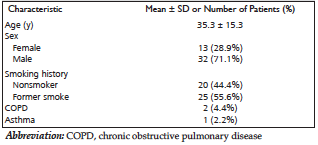
Table 1. Patient Demographic and Clinical Characteristics (N = 45)
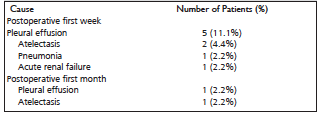
Table 2. Cause of Postoperative Respiratory Insufficiency (N = 45)