Volume: 13 Issue: 3 November 2015 - Supplement - 3
FULL TEXT
Objectives: The number of patients with end-stage cardiac failure who are waiting for transplant has been increasing, although number of heart donations stays limited. This has resulted in an increased use of left ventricular assist devices. Here, we present results of patients who received left ventricular assist device implants at Baskent University Ankara Hospital.
Materials and Methods: We retrospectively evaluated 24 patients who received a HeartWare left ventricular assist device (HeartWare Inc, Framingham, MA, USA) between April 2012 and February 2015; 2 patients (8.33%) were female.
Results: Patients had end-stage heart failure as a result of the following causes: 11 patients (45%) had ischemic cardiomyopathy, 12 patients (50%) had dilated cardiomyopathy, and 1 patient (4.1%) had acute myocarditis. Regarding use of the left ventricular assist device, 10 patients (41.6%) had the device as destination therapy, and the remaining 14 patients (48.6%) had it as bridge to transplant. The Interagency Registry for Mechanically Assisted Circulatory Support Profile was 1 for 3 patients (12.5%), 2 for 9 patients (37.5%), and 3 for 12 patients (50%). Mean follow-up was 239.8 days, and the mortality rate was 33.3% (8 patients died). During follow-up, we found that 3 patients (12.5%) had received a heart transplant and 1 patient (4.1%) eventually recovered, with the device extracted. Six patients had driveline infections, and 3 patients had cerebrovascular events.
Conclusions: With the insufficient number of cardiac donors, use of a left ventricular assist device for patients with end-stage cardiac failure who are awaiting transplant may be the best option.
Key words : Heart failure, Therapy
Introduction
Cardiac transplant is the most effective treatment for patients with end-stage heart failure who are refractory to medical therapy.1 However, a shortage of cardiac donations continues worldwide. Therefore, mechanical circulatory support is a good option for end-stage heart failure. Continuous flow left ventricular assist devices (LVAD) have been shown to prolong survival, increase exercise capacity, improve liver and kidney function, and alleviate heart failure symptoms.2 Here, we present results of patients who received a continuous flow LVAD at the Baskent University Ankara Hospital.
Materials and Methods
This study was conducted according to the guidelines of the Declaration of Helsinki, and the study protocol was approved before the beginning of the study by the Ethics Committee of our university. We retrospectively evaluated 24 patients who received a HeartWare LVAD (HeartWare Inc, Framingham, MA, USA) between April 2012 and February 2015. Two patients (8.33%) were female.
The Interagency Registry for Mechanically Assisted Circulatory Support profiling system was used to classify the severity of heart failure and adverse events.3 Use of LVAD was as destination therapy or bridge to transplant. Our study endpoints were survival to transplant, cardiac recovery, or death.
Patient treatment and device management
In the intensive care unit, our center continuously monitors arterial blood
pressure invasively from the radial or femoral artery, monitors pulmonary artery
pressure with use of a Swan-Ganz catheter through the jugular vein, monitors
left atrial pressure from a catheter introduced through a left atrial appendage,
and uses transesophageal echocardiography intraoperatively and postoperatively.
Once the device was implanted, the velocity of circulation (in revolutions/min)
was optimized to ensure proper cardiac output to the patients and to decompress
the left ventricle. We changed the velocity of the device to maintain central
venous pressure at 10 to 15 mm Hg and left atrial pressure at 15 to 20 mm Hg,
with interventricular septum in the midline position for transesophageal
echocardiography. Patients reported to the clinic monthly to assess prothrombin
time and ventricular function, with septum position for transesophageal
echocardiography checked every 3 months.
Results
Clinical characteristics of patients at admission are shown in Table 1. Left ventricular assist devices were implanted in 11 patients (45%) for ischemic cardiomyopathy, 12 patients (50%) for dilated cardiomyopathy, and 1 patient (4.1%) for acute myocarditis. Ten of the 24 patients (41.6%) had the device as destination therapy, with the remaining 14 patients (48.6%) having the device as bridge to transplant. The Interagency Registry for Mechanically Assisted Circulatory Support Profile was 1 for 3 patients (12.5%), 2 for 9 patients (37.5%), and 3 for 12 patients (50%).
Outcomes of patients after LVAD implant are shown in Table 2. Mean follow-up was 239.8 days. Overall mortality rate was 33.3% (8 patients died). During follow-up, 3 patients (12.5%) who had the device as bridge to transplant received a heart transplant, and 1 patient with postmyocarditis cardiomyopathy recovered and was weaned from the device. Six patients (25%) had driveline infection, with 2 of these patients needing surgical drainage and antibiotic therapy. Three patients (12.5%) had transient ischemic attack, with 1 of these patients (4.1%) having pump thrombosis but who recovered with fibrinolytic therapy.
Discussion
Cardiac transplant provides a considerable survival benefit for patients with end-stage heart failure. However, this option has been limited by a shortage of donated organs.4 Consequently, the number of patients receiving an LVAD has increased in recent years. Left ventricular assist devices are used for end-stage heart failure patients as destination therapy, as bridge to transplant, as bridge to candidacy, or as bridge to recovery.5-7 Teuteberg and associates highlighted that the possibility of a heart transplant during LVAD support changes continually over time. In an analysis of 2816 patients enrolled in the Interagency Registry for Mechanically Assisted Circulatory Support, Teuteberg and associates showed that 43.5% of patients who initially received the device with bridge to transplant intent were no longer listed as candidates for cardiac transplant 2 years after LVAD implant. At the same time, nearly 15% of patients who had received the device as destination therapy were later considered for transplant.8 In our study group, LVAD was used in 10 of our patients (41.6%) for destination therapy and 14 of our patients (48.6%) for bridge to transplant. Three of these patients were bridged to transplant, and 1 patient had LVAD removed after recovery of left ventricular function.
In a European study, outcomes after continuous flow LVAD implant showed a 1-year survival rate of 72%.9 In the study of Teuteberg and associates,8 the 2-year survival rate of patients supported for bridge to transplant was 78%, with rates of 70% for those with bridge to candidacy and 61% for those having the device for destination therapy. In our patient series, 8 patients (33.3%) died. Experience with application of LVAD is an important issue regarding mortality at our center; as experience grew, mortality rates were reduced.
Despite all efforts to optimize cardiac support devices, substantial complications still occur after implant, including bleeding, cerebral and peripheral thromboembolic complications, percutaneous driveline infections, right ventricular failure, life-threatening arrhythmias, and hemolysis.10,11
Najjar and associates reported that incidence of thrombosis in those with the HeartWare continuous flow LVAD ranged from 4.2% to 8%.12 The group also stated that thrombolysis, device replacement, or heart transplant can be used to treat those with device thrombosis. We identified outflow graft stenosis in 1 patient who received a thrombolytic agent for LVAD thrombosis. The stenosis was successfully corrected after placement of a stent to outflow graft.
The incidence of cerebrovascular accidents after LVAD placement was reported to be 8% to 25%.13 Three of our patients had cerebrovascular accidents, documented as transient ischemic attacks. Infarcts at the hippocampal area were identified by computed tomography, and patient prothrombin time was maintained at an international normalized ratio of between 3.5 and 4. One patient with hypoxemic brain injury after ventricular fibrillation and another patient who needed surgical drainage after hemorrhagic cerebrovascular accident died.
Right ventricular failure may be one of the most important causes of perioperative and postoperative mortality and morbidity in patients who receive LVAD implant. We found that 4 of our patients had right ventricular failure during the early postoperative period. With extracorporeal membrane oxygenation, 1 of these patients survived. When we analyzed our patients in the longer term, none of the patients had right ventricular failure.
Conclusions
Although heart transplant is the most effective treatment for patients with advanced-stage heart failure, an insufficient number of heart donations have resulted in mechanical assist devices being used with increasing frequency. Although these devices can be used as an alternative to transplant, they are useful in patients with who may be unsuitable for transplant as a destination therapy and to prepare patients waiting for transplant as bridge to candidacy. With the development of continuous flow LVADs, adverse effects due to the devices have decreased. Continuous flow LVAD has provided a more comfortable and prolonged life for patients with advanced-stage heart failure.
References:
- Rogers JG, Aaronson KD, Boyle AJ, et al. Continuous flow left
ventricular assist device improves functional capacity and quality of life
of advanced heart failure patients. J Am Coll Cardiol.
2010;55(17):1826-1834.
CrossRef - PubMed - Kirklin JK, Naftel DC, Kormos RL, et al. Fifth INTERMACS annual report:
risk factor analysis from more than 6,000 mechanical circulatory support
patients. J Heart Lung Transplant. 2013;32(2):141-156.
CrossRef - PubMed - Kirklin JK, Naftel DC, Stevenson LW, et al. INTERMACS database for
durable devices for circulatory support: first annual report. J Heart Lung
Transplant. 2008;27(10):1065-1072.
CrossRef - PubMed - Stehlik J, Edwards LB, Kucheryavaya AY, et al. The Registry of the
International Society for Heart and Lung Transplantation: twenty-seventh
official adult heart transplant report--2010. J Heart Lung Transplant.
2010;29(10):1089-1103.
CrossRef - PubMed - Carrel T, Englberger L, Martinelli MV, et al. Continuous flow left
ventricular assist devices: a valid option for heart failure patients. Swiss
Med Wkly. 2012;142:w13701.
CrossRef - PubMed - Beyersdorf F, Schlensak C, Berchtold-Herz M, Trummer G. Regression of
"fixed" pulmonary vascular resistance in heart transplant candidates after
unloading with ventricular assist devices. J Thorac Cardiovasc Surg.
2010;140(4):747-749.
CrossRef - PubMed - Cleveland JC, Jr., Grover FL, Fullerton DA, et al. Left ventricular
assist device as bridge to transplantation does not adversely affect
one-year heart transplantation survival. J Thorac Cardiovasc Surg.
2008;136(3):774-777.
CrossRef - PubMed - Teuteberg JJ, Stewart GC, Jessup M, et al. Implant strategies change
over time and impact outcomes: insights from the INTERMACS (Interagency
Registry for Mechanically Assisted Circulatory Support). JACC Heart Fail.
2013;1(5):369-378.
CrossRef - PubMed - Lahpor J, Khaghani A, Hetzer R, et al. European results with a
continuous-flow ventricular assist device for advanced heart-failure
patients. Eur J Cardiothorac Surg. 2010;37(2):357-361.
PubMed - Backes D, van den Bergh WM, van Duijn AL, Lahpor JR, van Dijk D, Slooter
AJ. Cerebrovascular complications of left ventricular assist devices. Eur J
Cardiothorac Surg. 2012;42(4):612-620.
CrossRef - PubMed - Felix SE, Martina JR, Kirkels JH, et al. Continuous-flow left
ventricular assist device support in patients with advanced heart failure:
points of interest for the daily management. Eur J Heart Fail.
2012;14(4):351-356.
CrossRef - PubMed - Najjar SS, Slaughter MS, Pagani FD, et al. An analysis of pump thrombus
events in patients in the HeartWare ADVANCE bridge to transplant and
continued access protocol trial. J Heart Lung Transplant. 2014;33(1):23-34.
CrossRef - PubMed - Nakajima I, Kato TS, Komamura K, et al. Pre- and post-operative risk
factors associated with cerebrovascular accidents in patients supported by
left ventricular assist device. -Single center's experience in japan. Circ
J. 2011;75(5):1138-1146.
CrossRef - PubMed

Volume : 13
Issue : 3
Pages : 149 - 152
DOI : 10.6002/ect.tdtd2015.P80
From the Department of Cardiovascular Surgery, Baskent University Faculty of
Medicine, Ankara, Turkey 06490
Acknowledgements: The authors declare that they have no sources of
funding for this study, and they have no conflicts of interest to declare.
Corresponding author: Bahadir Gultekin, Baþkent Üniversitesi Týp Fakültesi
Ankara Hastanesi, Kalp ve Damar Cerrahisi Anabilim Dalý, Fevzi Cakmak Cad.,
10.Sok., No:45, Bahçelievler, 06490, Ankara, Turkey
Phone (cellular): +90 505 780 5733
Phone (business): +90 312 203 6868 (1373-1379)
Fax: +90 312 223 7333
E-mail: bahadirg2002@gmail.com
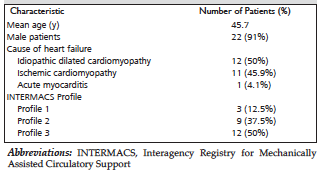
Table 1. Baseline Characteristics of 24 Study Patients
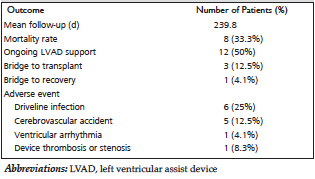
Table 2. Outcomes and Adverse Events in the 24 Study Patients